
Summary
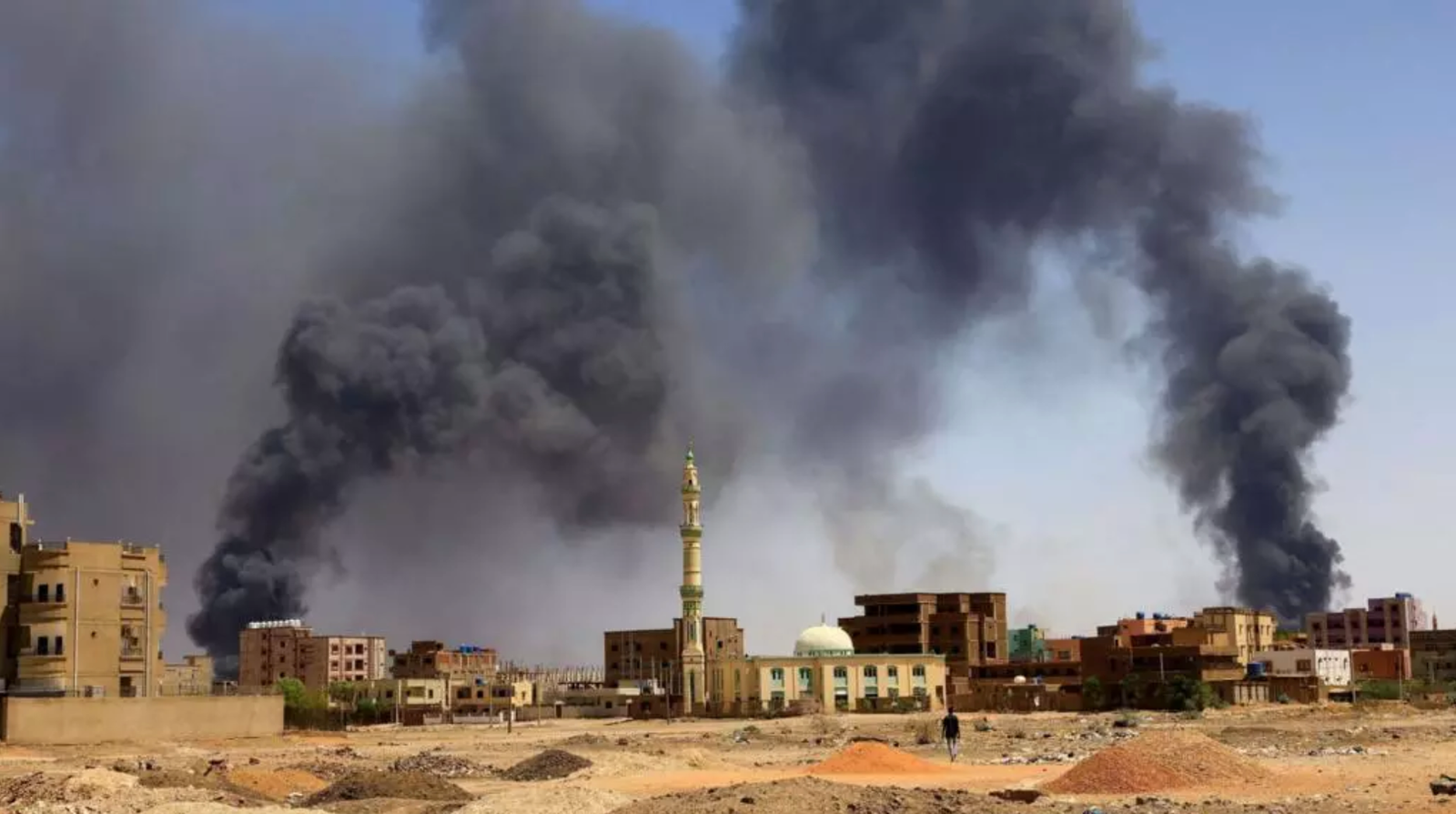
Since the outbreak of war in Sudan in mid-April 2023, alarming evidence and allegations have steadily mounted: an official U.S. report confirming government use of chemical weapons, human rights organizations documenting indiscriminate airstrikes carried out with unguided bombs, and investigative journalism uncovering how the Sudanese army acquired advanced Turkish Bayraktar drones and their munitions through complex supply chains.
At the same time, local reports describe waves of mysterious illnesses, coupled with floods and a cholera outbreak that have deepened the plight of civilians. This investigation brings together testimonies, open-source documentation, reports from international and local organizations, and an analysis of the link between arms flows and rising violations.
Methodology
This investigation draws its findings from:
(a) official documents and reports (U.S. State Department / Federal Register);
(b) investigative journalism and open-source research (Washington Post investigation into Baykar deals, Reuters reports);
(c) reports from human rights and medical organizations (Human Rights Watch, WHO, OCHA/UNICEF);
(d) local Sudanese media sources and statements from grassroots human rights groups (Emergency Lawyers, local correspondents); and
(e) analysis of videos and images shared on social media, some of which were verified by time and geolocation. Sources are cited throughout each section below.
The Scale of the Humanitarian Catastrophe — The Numbers Speak
The war has turned Sudan into one of today’s worst humanitarian disasters: millions in urgent need of aid and unprecedented health crises. UN agencies and relief organizations estimate tens of millions requiring humanitarian assistance, with millions more displaced internally and across borders. UNICEF and OCHA highlight stark indicators of a rapidly worsening crisis.
These figures provide the essential backdrop for understanding the consequences of any use of prohibited weapons or the deployment of advanced military technology in areas densely populated with civilians.
Evidence and Allegations of Chemical Weapons Use — What Do We Know, and What Remains Under Investigation?
A. The U.S. Official Position
In an official notice published in the Federal Register, the U.S. administration determined that the Government of Sudan used chemical weapons in 2024, in violation of international law. The text was explicit: “The Government of Sudan has used chemical weapons in violation of international law.” This triggered a set of sanctions and restrictions under the 1991 Chemical and Biological Weapons Control and Warfare Elimination Act, which came into effect in June 2025.
B. The Chemical Agent: Local Allegations vs. Incomplete International Verification
International outlets, citing U.S. officials, reported preliminary evidence pointing to chlorine gas in specific attacks. By contrast, Sudanese grassroots groups, medical associations, and the Emergency Lawyers network described symptoms and environmental traces consistent with blister agents such as sulfur mustard.
To date, however, no independent international body — including the OPCW — has issued a final, public report confirming the type of chemical agent used in each alleged attack. The absence of verified sampling and laboratory analysis leaves these claims scientifically unproven, underscoring the urgent need for independent investigation.
C. Medical Testimonies and Epidemiological Indicators
Doctors and local health workers documented sharp rises in cases with unusual clinical patterns: sudden nausea, vomiting, respiratory distress, severe skin burns, and mass animal deaths in areas where chemical allegations surfaced. Sudanese legal groups, including Emergency Lawyers, have urged an international inquiry, calling the incidents “grave violations of international humanitarian law.” Yet limited diagnostic tools and political constraints have prevented standard laboratories from confirming chemical agents such as sulfur mustard.
Turkish Armed Drones (Bayraktar / Akinci): From Procurement to the Battlefield
A. Documented Arms Flows
International investigations revealed that Turkish defense firms — primarily Baykar — were involved in deals supplying Bayraktar TB2 drones, advanced Akinci models, and associated munitions to Sudan through layered intermediaries and complex logistics. These transfers raise major concerns about violations of international arms embargoes.
A Washington Post investigation verified internal communications and contracts showing deliveries of drones and munitions to Sudanese military facilities in mid-to-late 2024. As the paper reported: “Baykar shipped at least eight TB2 drones and hundreds of warheads …” (document-verified).
B. Deployment on the Battlefield
Open-source footage, local testimonies, and media reports indicate these drones were deployed in airstrikes that caused civilian casualties. Their presence altered the balance of firepower, allowing longer-range, higher-frequency strikes. Rights-focused OSINT investigations stressed that the introduction of precision or semi-precision systems raises risks of selective targeting — including strikes in populated areas.
C. Losses and Conflicting Reports
During clashes in Darfur and Blue Nile, local media outlets such as Darfur24 and Sudan Akhbar reported the downing of TB2 and Akinci drones, with some claims of storage facilities being destroyed. While verification remains limited, these reports suggest that Sudan’s drone fleet sustained significant losses, reflecting the intensity of drone warfare on the ground.
How These Weapons Escalate Abuses: Mechanisms of Harm
- Battlefield Control: Armed drones give Sudanese forces the capacity to conduct repeated, long-range strikes. Misuse of this capability enables the targeting of civilian gatherings or relief supply lines. Human Rights Watch has already documented the use of unguided aerial bombs that killed civilians, indicating a broader pattern of disregard or intent.
- Chemical Weapons as Tools of Terror: If confirmed, the use of chemical agents would elevate the violations to the level of internationally prosecutable crimes, further driving displacement and civilian flight from contaminated areas where local treatment is impossible.
- External Supply Chains: The documented weapons transfers highlight the role of regional actors seeking influence through arms deals. This turns Sudan’s war into a battleground for geopolitical rivalries, where civilians bear the cost. As the Washington Post noted, drone shipments were closely tied to disputes over access to ports and mineral resources.
5. International Stance and Sanctions
A. U.S. Sanctions and Official Measures
On June 27, 2025, the U.S. administration published a determination in the Federal Register concluding that the Government of Sudan had used chemical weapons, in violation of international law. Under the 1991 Chemical and Biological Weapons Control and Warfare Elimination Act, Washington imposed a package of measures: suspension of most forms of assistance (with narrow exceptions for humanitarian aid), prohibition of military sales and exports of sensitive technologies, and restrictions on credit lines involving the Sudanese government. Limited exemptions were carved out for civil aviation safety and humanitarian imperatives. These sanctions will remain in force for at least one year, unless otherwise reviewed.
B. UN, OPCW, and International Mechanisms
The UN Human Rights Council, its investigative missions, and the Office of the High Commissioner for Human Rights (OHCHR) have documented widespread violations, urging expansion of investigative mandates. Within the chemical weapons framework, the OPCW Executive Council has discussed the allegations and called for independent investigations. Yet, to date, no laboratory-based, publicly available report has conclusively attributed a specific chemical agent to any particular actor. This highlights the urgent need for on-site access, internationally certified sampling, and technical verification.
C. Political and Diplomatic Fallout
The exposure of supply chains and weapons transfers has triggered regional diplomatic frictions. Several governments have begun reassessing export licensing and oversight of domestic defense companies. Civil society groups have demanded strict embargoes on dual-use technologies and military equipment potentially linked to violations. A Washington Post investigation tied drone supply contracts to negotiations over port access and mineral concessions, illustrating how economic interests intertwine with continued militarization. Turkey and Iran, in particular, have emerged as key external suppliers, heightening the geopolitical stakes.
6. Key Evidence Base
- U.S. Federal Register determination (June 2025) establishing Sudan’s chemical weapons use and imposing sanctions.
- Washington Post investigative reporting on Baykar contracts, internal communications, and deliveries of TB2 and Akinci drones.
- Human Rights Watch field reports documenting indiscriminate airstrikes and civilian casualties from unguided aerial bombs in Darfur.
- UN humanitarian agencies (OCHA, UNICEF, WHO) quantifying the humanitarian catastrophe, including displacement and epidemic outbreaks.
- Sudanese civil society and legal groups (notably the Emergency Lawyers) reporting environmental and medical indicators consistent with chemical agents and calling for an urgent international inquiry.
7. Critical Conclusion and Immediate Recommendations
Critical Conclusion:
The accumulation of evidence and allegations strongly suggests that Sudan’s conflict now involves not only conventional warfare but the introduction of prohibited or highly concerning weapons — chemical agents and advanced armed drones. These developments have escalated the lethality of the conflict, magnified civilian harm, and altered the trajectory of the war. The absence of independent scientific verification does not diminish the urgency; rather, it underscores the need for immediate international response.
Immediate Recommendations:
- Launch an independent, science-based international investigation — led jointly by the OPCW and UN experts — with secure access to alleged attack sites and adherence to certified sampling protocols.
- Freeze all additional arms transfers and spare parts to Sudan, and conduct expedited reviews of export licenses for companies named in investigative reports.
- Protect medical and laboratory infrastructure by ensuring international support, safe conditions for local laboratories, and secure channels for sample transfer to reference labs abroad.
- Accelerate accountability pathways — ensure UN Fact-Finding Mission evidence feeds into prosecutorial bodies such as the ICC or a dedicated tribunal, where war crimes or crimes against humanity indicators exist.
- Guarantee humanitarian corridors and civilian protection, including demining operations and clearance of unexploded ordnance, to mitigate further risks to civilians.