
This research explores the impact of wars and armed conflicts on the rise of extremist groups, using Sudan as a contemporary case study. Since the outbreak of the civil war in Sudan in 2023, the country has witnessed a notable resurgence of the Islamic Movement affiliated with the Muslim Brotherhood, which has taken advantage of political and security vacuums to reorganize and form armed militias. The study also examines European responses to the spread of Islamist groups, particularly amid growing concerns over the Brotherhood’s influence in Europe through education, funding, and civil society institutions. The research highlights the contrast between the increasing surveillance within Europe and the weak international response to the Brotherhood’s resurgence in Sudan, raising questions about the regional and global implications of this expansion.
Stockholm, Sweden
Whenever a war breaks out anywhere on the world map, state leaders hold their breath and security agencies brace for impact, fearing the rise of extremist or terrorist hotspots while warring factions are preoccupied with the battlefield.
In the Middle East, conflict zones span from Yemen to Sudan, Syria, Libya, and the Palestinian territories regions that often become export hubs for extremists. Scenes of violence can also awaken dormant jihadist cells with links to various organizations across the globe.
Faced with these dangers, intelligence and security agencies across many European countries have intensified early action against extremist organizations especially after years of experiencing the devastating effects of terrorism.
In Europe, many activities and investments by various states have come under unprecedented scrutiny. Some European nations, once considered safe havens, have adopted measures to monitor and seize assets tied to these groups.
Sudan as a Case Study: Risks of Conflict
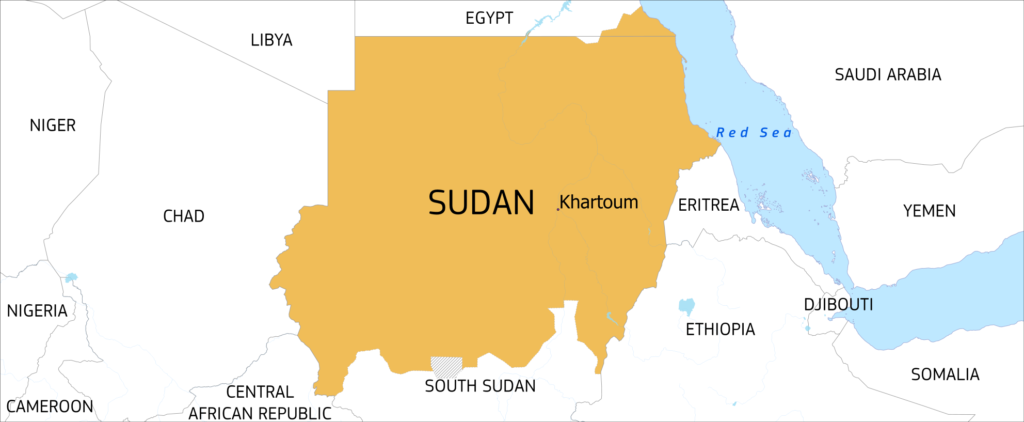
The second decade of the 21st century witnessed a series of global blows to the Muslim Brotherhood before Sudan’s civil war erupted in 2023. That war opened the door for the return of the Islamic Movement the Brotherhood’s branch in Sudan riding on the coattails of the military, after having been politically sidelined by the “Dismantling Committee.”
In 2022, several Sudanese Islamist groups and parties signed a declaration establishing the “Broad Islamic Current,” with the Sudanese Islamic Movement aligned with the dissolved National Congress Party and the Muslim Brotherhood as a central actor. That same party was ousted from power by a popular uprising in April 2019.
From the early days of the war, Islamists led calls for mobilization and popular resistance, urging citizens to join the fight. Soon after, reports emerged of armed groups formed under their banner, such as the “Al-Baraa bin Malik Brigade,” according to Sudan Tribune.
A 2022 report from the TRENDS Research and Advisory Center noted that the financial and economic activities of the Muslim Brotherhood came under pressure in Africa. Starting in the second half of 2020, authorities in various countries especially Sudan began monitoring and restricting their operations, culminating in the establishment of a committee tasked with dismantling the Brotherhood’s networks and tracking their finances.
European Links and Safe Havens
One of the most notable European actions was Austria’s 2019 decision to ban the symbols and insignias of the Muslim Brotherhood. In November 2020, Austrian authorities launched a major security operation targeting 60 offices belonging to Brotherhood-linked associations and institutions, as reported by Kurier.
According to the Arab Center for Research on Extremism, a report on global influence operations revealed that Brotherhood-affiliated groups in Europe received nearly €80 million in funding from European governments over the past decade raising alarm about the group’s impact on European civil society.
The European Center for Counterterrorism and Intelligence Studies notes that since 2014, European intelligence agencies under parliamentary pressure have been increasingly exposing the activities and dangers posed by political Islam, particularly the Brotherhood. Some European analysts even consider the Brotherhood more dangerous than Salafi-jihadist groups like al-Qaeda or ISIS.
Lourdes Vidal, head of Middle East Studies at the European Institute of the Mediterranean, explains: “The problem with the Brotherhood in Europe isn’t that they commit violence because they usually don’t. The real danger lies in their systematic efforts to create ideological and religious environments that normalize extremist ideas.”
The Swedish Model
Among European countries, Sweden has emerged as one of the prime examples of how the Brotherhood has built “parallel societies,” especially within Scandinavian nations. The European Center notes that European governments often rely on local associations for awareness programs some of which are linked to the Brotherhood. This creates the risk that well-intentioned public funding ends up in the Brotherhood’s hands.
For example, Sweden’s Ministry of Defense has acknowledged that the Brotherhood maintains links to various Islamist organizations and works to build a parallel society in Sweden, one of the world’s most prosperous and socially equal countries. This makes it a strategic target for Brotherhood expansion.
Dr. Evin Ismail, an expert on political Islam, argued three years ago that the Brotherhood’s history and rhetoric promote ideologies that incite violence. While European governments are increasingly aware of these risks, their responses have been inconsistent. In Sweden, some Brotherhood-linked groups reportedly receive public funding and operate their own schools.
Sweden’s intelligence services have long called for the closure of Brotherhood-affiliated schools, citing the threat of child radicalization. According to Dr. Ismail, this marks a growing awareness of the Brotherhood’s ideological threats making it harder for them to present themselves as “moderates.”
Since September of last year, Swedish authorities have undertaken a broad restructuring of public funding across sectors like education and civil society, financially squeezing political Islam networks. One of the key targets was the Ibn Rushd Study Association, affiliated with the Brotherhood.
The Norwegian Model
In Norway, the rise of political Islam has followed a similar pattern to other Nordic countries, largely enabled by the arrival of radicalized individuals from Muslim-majority countries. According to the Northern Europe Network, the Brotherhood in Norway coordinates most of its activities from its more prominent Swedish branch.
Norwegian authorities have gradually recognized the danger posed by political Islam. Since 2014, they have labeled Islamic extremism as the country’s greatest national threat.
One Norwegian political party was heavily involved in extremism, even facilitating the travel of Norwegian fighters to jihadist fronts in Syria and Iraq. The group pledged allegiance to ISIS after it declared its so-called caliphate in 2014.
Norway remains the only Scandinavian country to have experienced an Islamist terrorist attack. In 2020, Zaniar Matapour opened fire on unarmed civilians in Oslo.
In June 2024, Norwegian authorities voiced concern over the growing appeal of violent extremist ideologies among youth, including both Islamists and far-right movements. The Norwegian Security Agency’s 2025 terrorism threat report explicitly stated that political Islam poses a greater danger than far-right extremism, with particular worry about child radicalization.
European Apathy and the Return of the Sudanese Brotherhood
The Al-Rabetat Center for Strategic Studies has pointed out a worrying trend: Europe’s “cold response” to the Sudanese war and the role of the Islamist “Kizan” (Sudanese slang for Brotherhood) in fueling the conflict. Sudanese voices have criticized the EU’s reluctance to engage meaningfully with the crisis, arguing that such disengagement benefits the Brotherhood and reignites suspicions of Western support for the group.
Observers are also sounding the alarm over Brotherhood attempts to obstruct international, European, and Arab peace efforts to end the war that began in 2023. Many fear that the military-backed return of Brotherhood leadership is aimed at regaining power, escaping legal accountability for atrocities including the massacre of protesters in June 2019 and halting the dismantling of corruption networks and prosecution for the 1989 coup.
Perhaps most troubling for Sudanese citizens today is the transformation of their capital into a hub for extremist groups. The Sudanese Engineers’ Union recently revealed a list of 33 armed militias and terrorist brigades linked to the Islamic Movement that have emerged during the two years of war. These groups are being elevated and celebrated under military rule, with videos documenting their presence in Khartoum.