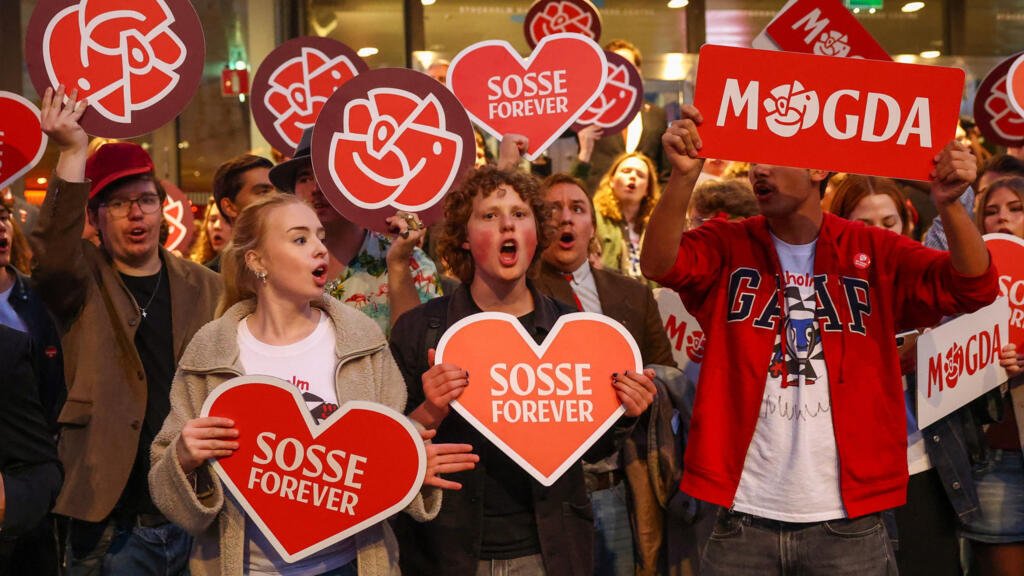
A Razor-Thin Result, a Changing Party System and the Difficult Politics of Governing a Divided Country
Swedish Center for Studies and Research (SCSR)
Executive Summary
Sweden’s 2026 parliamentary election has produced something more consequential than a narrow contest between two political blocs. It has revealed a political system undergoing a deeper transformation. With nearly all votes counted as of September 17, the opposition parties—Social Democrats, Left Party, Green Party and Centre Party—held a preliminary 176 seats in the 349-seat Riksdag, compared with 173 seats for the four parties associated with the Tidö cooperation: the Moderates, Sweden Democrats, Christian Democrats and Liberals. The Swedish Election Authority has stressed that the final result has not yet been formally established and is expected during the weekend following the September 13 election.
The numbers illustrate the extraordinary narrowness of the result. According to the latest preliminary SVT count, the Social Democrats held 99 seats, the Left Party 30, the Greens 22 and the Centre Party 25. On the other side, the Moderates held 70, the Sweden Democrats 62, the Christian Democrats 22 and the Liberals 19. This arithmetic does not automatically determine the next government. Sweden’s system of negative parliamentarism means that government formation depends on whether a proposed prime minister can avoid being rejected by an absolute majority of the Riksdag, making relations among parties inside the nominal blocs crucial.
The election also produced another significant development: the Sweden Democrats lost electoral ground for the first time since entering parliament in 2010. Their vote share fell to around 17.6 percent, compared with 20.5 percent in 2022, according to preliminary reporting. At the same time, the party remains a major parliamentary force, meaning that the result should not be interpreted simply as the disappearance of the political pressures that contributed to its rise.
For the Swedish Center for Studies and Research (SCSR), the central significance of the 2026 election lies precisely in this combination of continuity and change. Swedish politics remains organised around increasingly distinct blocs, but those blocs contain significant internal disagreements. Immigration and crime remain powerful political issues, yet economic conditions, welfare, healthcare, energy and household finances continue to shape electoral behaviour. NATO membership has transformed the framework of Swedish security policy without eliminating disagreements about defence priorities. And the Sweden Democrats have become embedded in the parliamentary architecture even as their electoral advance has, at least in this election, reversed.
The question after September 2026 is therefore larger than which coalition occupies Rosenbad. It is whether Sweden’s increasingly fragmented party system can produce stable government while managing profound changes in security, migration, social cohesion, welfare and the economy.
A Victory Measured in Parliamentary Inches
The defining feature of the election is its narrowness. Preliminary results have placed the opposition only a few seats ahead of the governing side. Reuters reported on September 16 that the margin between the blocs was measured in tens of thousands of votes, while the Swedish Election Authority continues its final count. In a country of more than ten million inhabitants, such a small difference gives enormous political significance to marginal shifts in turnout and voter preference.
That matters because narrow parliamentary arithmetic changes the nature of governing. A government relying on only a tiny majority has limited room for defections, internal disputes or tactical voting. Individual parties can acquire leverage disproportionate to their electoral size because withdrawing support can threaten the government’s parliamentary position. Negotiations over budgets and major reforms therefore become exercises not simply in policymaking but in coalition survival.
The situation is particularly complicated for the centre-left because the parties capable of producing its parliamentary advantage do not constitute a naturally unified governing coalition. The Social Democrats, Left Party, Greens and Centre Party overlap on some issues but differ substantially on taxation, labour-market policy, business regulation, environmental policy and the appropriate role of the Left Party in government. Winning more seats collectively than the opposing bloc therefore does not automatically produce a coherent governing programme.
Sweden’s immediate post-election challenge is consequently one of political engineering. The election may have produced a numerical majority, but government formation requires converting electoral arithmetic into a sustainable parliamentary arrangement.
Magdalena Andersson and the Return of the Social Democrats
At the centre of this process stands Social Democratic leader Magdalena Andersson. Her party remains the largest political force in Sweden, but the strategic challenge is fundamentally different from the era when Social Democratic dominance allowed governments to be constructed around one central party. Modern Swedish politics requires considerably more complex parliamentary coalitions.
The Social Democrats must therefore perform two tasks simultaneously. They need to demonstrate that they can lead a government capable of addressing the issues that have shifted Swedish politics over the past decade, while also building sufficient cooperation with parties whose economic and social priorities are not always compatible.
This is particularly important because a return of a Social Democratic-led government would not necessarily represent a return to Sweden’s pre-2022 political direction. The political environment itself has changed. Sweden is now a NATO member. Migration policy has tightened substantially. Organised crime has reshaped debates about policing and criminal justice. Defence spending has risen sharply, while civil preparedness and Total Defence have become mainstream national priorities. Energy security and industrial competitiveness have acquired greater strategic importance.
Any new government will therefore inherit a Sweden whose policy centre of gravity has already moved. Elections can replace governments more quickly than they reverse structural political change.
The Sweden Democrats Have Suffered a Setback — Not Disappeared
The most closely watched party result may belong to the Sweden Democrats. Preliminary results put the party at approximately 17.6 percent, a decline of roughly three percentage points from the 2022 election. Reuters describes this as the party’s first electoral decline since entering parliament sixteen years ago.
That result is politically important because the Sweden Democrats had previously followed an extraordinary trajectory. A party that was once isolated by much of Sweden’s political establishment gradually became one of the country’s largest parliamentary forces and, following the 2022 election, an essential parliamentary partner of the centre-right government through the Tidö Agreement.
Participation in political influence, however, creates a problem for parties built partly around opposition to the political establishment. Once such a party becomes influential over government policy, voters can judge it not simply by what it promises but by what the government actually delivers.
Reuters’ post-election analysis points to this dynamic, noting that the Sweden Democrats faced some of the political costs associated with supporting the outgoing government. It also reported particularly significant losses in some multicultural urban areas, where increased turnout benefited the centre-left.
Yet interpreting the result as a rejection of the issues associated with the Sweden Democrats would be premature. Immigration policy has already changed substantially across Swedish politics. Crime and integration remain major national concerns, and several policies once located primarily on the political right have entered mainstream debate.
The more important question is therefore whether Sweden is experiencing a decline in the Sweden Democrats themselves or the normalisation of parts of the agenda that originally fuelled their growth.
Those are very different developments.
The Tidö Experiment Has Changed Swedish Politics
The 2022–2026 government represented an important political experiment. Prime Minister Ulf Kristersson governed through cooperation among the Moderates, Christian Democrats and Liberals while depending on the Sweden Democrats through the Tidö Agreement.
That arrangement allowed the Sweden Democrats substantial policy influence without cabinet membership. By the 2026 campaign, Kristersson had gone further, saying he was prepared to include the party formally in government if the right-wing bloc secured another mandate.
The election result has complicated that possibility, but the political transformation produced by the Tidö period cannot simply be reversed. The arrangement demonstrated that a party once treated as outside normal coalition politics could become integral to government policymaking.
This matters for the longer-term development of Sweden’s party system. The old distinction between establishment parties and the Sweden Democrats has weakened. Future centre-right governments will have to determine whether cooperation becomes deeper, including potential cabinet participation, or whether the 2026 setback encourages a different strategy.
The Liberals may become particularly important to this question. Their position between liberal political traditions and participation in a bloc containing the Sweden Democrats illustrates one of the structural tensions inside the Swedish right.
Immigration Is Entering a New Political Phase
Few issues have transformed Swedish politics as profoundly as immigration. The debate contributed significantly to the rise of the Sweden Democrats and gradually pushed other parties toward more restrictive positions.
Under the outgoing government, Sweden adopted significantly tighter migration policies. Reuters reported before the election that asylum numbers had fallen to their lowest level in approximately four decades, while the government pursued policies intended to reduce migration and strengthen requirements surrounding integration and residency.
The political question after 2026 is therefore no longer simply whether Sweden should have a restrictive or permissive migration policy. The debate is increasingly moving toward the consequences of the population Sweden already has.
Integration, employment, education, housing, language acquisition and residential segregation may become more important than border numbers alone.
This shift could be strategically significant. Reducing immigration can change future demographic flows, but it does not automatically resolve existing social inequalities or segregation. Sweden’s long-term cohesion will depend substantially on whether people already living in the country can participate successfully in the labour market, educational system and civic institutions.
The election results in highly diverse neighbourhoods reinforce this political challenge. Reuters found exceptionally strong centre-left support in some immigrant-heavy districts and reported that turnout mobilisation contributed to Sweden Democrat losses. The development illustrates the emergence of immigrant-origin voters not simply as the subjects of Swedish migration politics but increasingly as active participants shaping electoral outcomes.
Crime Policy Has Changed the Political Centre
Crime and gang violence have similarly transformed Swedish politics. The escalation of shootings and bombings during previous years damaged Sweden’s international reputation for social stability and created intense domestic pressure for stronger state intervention.
The outgoing government responded with expanded police powers and tougher criminal-justice policies. Reuters reported before the election that shooting deaths had fallen substantially during Kristersson’s term, although the causes and durability of that decline remain subjects requiring longer-term assessment.
Whatever government emerges after the election will face strong political pressure to preserve improvements in public security. This makes a wholesale reversal of tougher crime policies unlikely. The disagreement will instead concern the balance between enforcement and prevention.
Police operations can disrupt criminal networks, but long-term reductions in recruitment also depend on schools, social services, employment, family environments and local institutions. Sweden therefore faces a dual challenge: maintaining sufficient coercive capacity against organised crime while reducing the social conditions that allow criminal networks to recruit young people.
This is where ideological differences between the blocs may become clearer. The right has generally emphasised enforcement, sentencing and policing more heavily, while parties on the left have traditionally placed greater emphasis on social prevention. In practice, Sweden may increasingly require both.
The Welfare State Is Returning to the Centre of Politics
The international focus on Swedish politics often concentrates disproportionately on immigration and the Sweden Democrats. That can obscure another important electoral reality: Sweden remains a highly developed welfare state whose voters care deeply about healthcare, education, pensions, employment and household finances.
After years dominated by inflation, higher interest rates and pressure on household budgets, economic security has become inseparable from political security. Municipalities and regions face difficult questions about funding healthcare, schools and social services while demographic ageing increases long-term expenditure.
This creates a challenge for any incoming government. Sweden is simultaneously attempting to strengthen defence, rebuild civil preparedness, improve policing, finance infrastructure and maintain an extensive welfare system.
All of these priorities require resources.
The political conflict of the next parliamentary term may therefore increasingly concern fiscal allocation. How much should Sweden spend on defence relative to welfare? How should municipalities finance growing social needs? How should taxation be structured without weakening investment and competitiveness?
These questions could become more politically difficult than some of the cultural conflicts that dominated earlier elections because they involve direct competition for public resources.
Sweden’s NATO Transformation Is Unlikely to Be Reversed
One area where the election is unlikely to produce a fundamental strategic reversal is Sweden’s NATO membership. Accession transformed the country’s security position and has already produced deep changes in defence planning, military investment and Nordic cooperation.
Sweden no longer plans national defence primarily as an independent military problem. Its territory now forms part of NATO’s northern European operational geography, connecting Norway’s Atlantic access, Finland’s long border with Russia and the Baltic region.
A change of government may alter priorities within defence policy, but the underlying strategic environment remains. Russia’s war against Ukraine, hybrid threats in the Baltic region, critical-infrastructure vulnerabilities and NATO’s requirements will continue influencing Swedish planning.
The security debate may therefore shift from whether Sweden should belong to NATO toward what Sweden should contribute to NATO.
That is a much more practical and financially consequential debate.
Defence procurement, military infrastructure, conscription, ammunition production, host-nation support and the resilience of northern transportation networks will increasingly compete for political attention and government funding.
Election Security Has Become National Security
The 2026 election was also conducted under security conditions fundamentally different from those of earlier Swedish elections. The government and relevant authorities prepared specifically for potential foreign malign information influence, cyber risks and AI-enabled manipulation. Swedish authorities described the electoral system as fundamentally robust but acknowledged that the deteriorating security environment and rapid technological change required stronger resilience.
Legislation that entered into force in December 2025 strengthened the Election Authority’s responsibility for coordinating election-security activities. The Swedish Security Service, Police, Psychological Defence Agency, Civil Defence and Resilience Agency and Election Authority have been involved in broader cooperation, while authorities also increased attention to AI literacy and misleading information on digital platforms.
The significance extends beyond whether any specific foreign operation materially affected the 2026 result. Election protection is becoming a permanent function of democratic governance.
Artificial intelligence makes this challenge more difficult because manipulated audio, video and text can increasingly be produced rapidly and cheaply. Future campaigns may confront information incidents that spread faster than governments or media organisations can verify them.
Sweden’s experience therefore provides a broader European lesson: protecting elections now requires capabilities traditionally associated with national security alongside the transparency necessary for democratic legitimacy.
A One-Seat or Three-Seat Majority Changes How Power Works
The preliminary 176–173 division demonstrates how fragmented parliamentary systems can give smaller parties substantial negotiating power. A government dependent on several parties cannot assume that electoral victory automatically translates into legislative control.
The Centre Party could become especially important in a centre-left parliamentary arrangement because it combines opposition to the outgoing Tidö government with economic positions that can differ sharply from those of the Left Party. The Greens introduce another set of priorities surrounding climate and environmental policy. The Social Democrats must therefore potentially construct parliamentary support across parties whose agreement on replacing the previous government does not automatically translate into agreement on governing.
This is not necessarily evidence of political dysfunction. Coalition-building is normal in parliamentary democracies. But extremely narrow margins magnify disagreements.
The political durability of the next government may therefore depend less on the election result itself than on the architecture negotiated afterward.
Sweden Is Becoming Politically More European
For decades, Sweden was sometimes perceived internationally as politically exceptional: a country characterised by strong Social Democratic institutions, a large welfare state, high social trust and comparatively stable political competition.
The past decade has made Sweden look more like the rest of Europe.
Traditional parties have weakened relative to their historical dominance. Immigration has reorganised political competition. A right-wing populist party has become a major parliamentary force. Coalition formation has become more difficult. Cultural identity and security have become more prominent electoral questions.
Yet the 2026 result also demonstrates that Sweden does not move mechanically with broader European political trends. At a moment when nationalist and populist parties have expanded their influence across several European democracies, the Sweden Democrats have recorded an electoral decline.
Whether that represents a temporary correction or the beginning of a more durable change cannot be determined from a single election.
What can be observed is a Swedish political system becoming more competitive and less predictable.
The Government-Formation Test
The next institutional milestone comes after the final result is formally established. Sweden’s newly elected Riksdag is scheduled to convene on September 28, when members will be called and a Speaker and three Deputy Speakers elected. The Speaker plays the central constitutional role in the government-formation process, consulting party representatives and proposing a candidate for prime minister.
This process matters especially in 2026 because parliamentary arithmetic is exceptionally tight. Under Swedish negative parliamentarism, a candidate does not need 175 affirmative votes to become prime minister. Instead, the candidate fails if 175 or more members vote against them. Abstention can therefore become a powerful political instrument.
Government negotiations consequently involve more than identifying parties prepared to enter cabinet. They also involve finding parties willing to tolerate a government they may not formally support.
That distinction could determine the next Swedish government.
The Deeper Election Was About the Swedish Model
Beneath the competition between Magdalena Andersson and Ulf Kristersson lies a broader debate over what the Swedish social model should become.
Sweden must simultaneously remain economically competitive, finance an ageing welfare state, integrate a diverse population, suppress organised crime, strengthen national defence, complete its transition into NATO’s security architecture and adapt its economy to technological and climate change.
These challenges interact.
Higher defence spending creates fiscal pressure elsewhere. Poor integration reduces employment and increases welfare expenditure. Housing segregation can affect educational outcomes and criminal recruitment. Weak growth makes welfare commitments more difficult to finance. Industrial investment requires energy, infrastructure and skilled labour.
The Swedish model therefore cannot be maintained simply by preserving existing institutions. It must adapt.
The central political disagreement concerns how.
Conclusion: A Divided Electorate, but Not Necessarily a Divided Sweden
The 2026 election should not be reduced to a simple narrative of left defeating right or the Sweden Democrats being rejected. The preliminary result is too close and the political transformation too complex for either interpretation. As of September 17, the opposition holds a narrow parliamentary advantage, but the Election Authority has not yet formally established the final result.
What the election does reveal is a country entering a new phase of political competition. The Social Democrats remain the largest force but cannot govern Sweden as they once did. The Moderates remain central to the right but depend on a wider conservative political ecosystem. The Sweden Democrats have suffered their first parliamentary-election setback since entering the Riksdag, yet many issues associated with their rise have become embedded in mainstream Swedish politics. Smaller parties can determine government formation because the blocs are separated by only a handful of seats.
For the Swedish Center for Studies and Research (SCSR), the most important question after the election is therefore not simply who becomes prime minister. It is whether Sweden can convert political fragmentation into effective governance.
The next government will inherit challenges that do not respect party boundaries. Organised crime cannot be addressed entirely through policing or entirely through social policy. Integration cannot be solved solely by reducing migration or increasing welfare expenditure. NATO membership requires military resources but also infrastructure and civilian resilience. Maintaining the welfare state requires both public spending and an economy capable of financing it.
The election has also demonstrated the importance of democratic resilience. Swedish authorities prepared for foreign influence, digital manipulation and new AI-related information risks while maintaining an electoral process designed around decentralised counting and institutional transparency. The final count itself is still underway, a reminder that democratic legitimacy depends on allowing institutional procedures to conclude before treating preliminary numbers as definitive.
Sweden therefore emerges from September 2026 neither politically transformed beyond recognition nor restored to an earlier era. It remains a country in transition. The old political order has weakened, but a stable replacement has not yet fully emerged. Immigration politics is evolving into integration politics. The debate over NATO is evolving into a debate over Sweden’s responsibilities inside NATO. The Sweden Democrats are moving from insurgent politics toward the consequences of institutional influence. And the Social Democrats face the challenge of translating electoral strength into a workable parliamentary coalition.
The narrowness of the election is ultimately what makes it so revealing. Almost half of the electorate supported parties on either side of Sweden’s principal political divide. No durable governing strategy can therefore be built on the assumption that one half of the country can simply defeat and disregard the other.
The defining test of Sweden’s post-2026 politics will not be which bloc can claim victory by a few seats. It will be whether a fragmented parliament can produce the long-term compromises required to govern a country whose security environment, economy and society are changing simultaneously.
Editorial note: This analysis reflects the preliminary count available on September 17, 2026. The Swedish Election Authority expects the formal Riksdag result to be established approximately one week after election day.