Why Human Capital Is Becoming the Most Critical Dimension of Post-War Recovery
By Swedish Center for Studies and Research
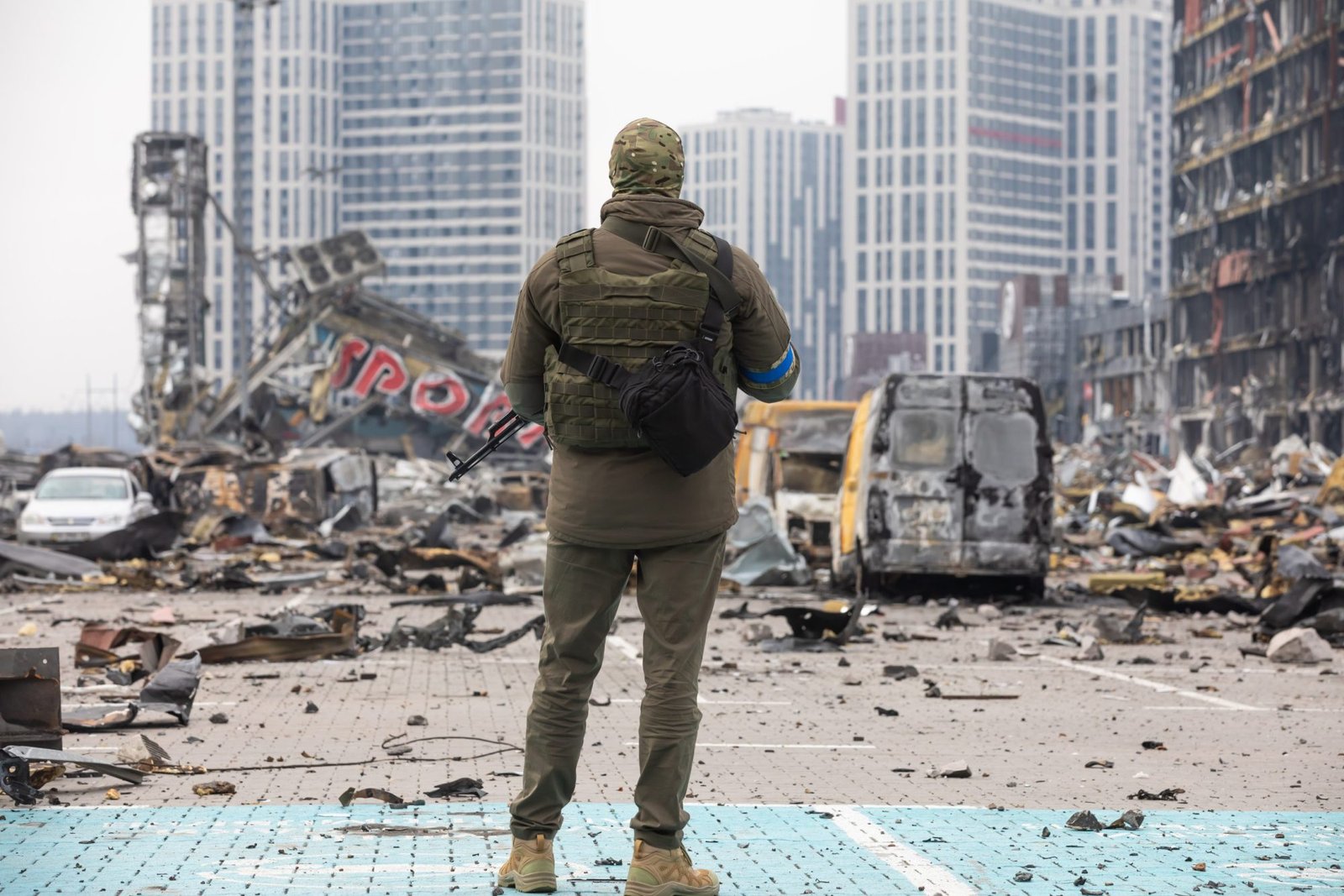
The debate surrounding Ukraine’s future has largely been dominated by discussions of reconstruction budgets, destroyed infrastructure, military assistance, and international investment. Governments, international financial institutions, and donor conferences have announced ambitious plans to rebuild roads, bridges, hospitals, schools, energy infrastructure, and housing once security conditions permit. Estimates of reconstruction costs continue to rise into the hundreds of billions of euros, making Ukraine one of the largest reconstruction projects undertaken in Europe since the Second World War. Yet beneath these discussions lies a far more fundamental challenge that receives considerably less political attention. Ukraine’s long-term recovery will depend not simply on rebuilding physical infrastructure, but on rebuilding the country’s human capital.
The destruction caused by war extends well beyond damaged cities and industrial facilities. Millions of Ukrainians have left their homes since 2022, creating the largest displacement crisis Europe has experienced in decades. Families have settled across European Union member states, children have entered foreign education systems, professionals have joined new labour markets, and thousands of businesses have relocated their activities outside Ukraine. While much international attention has focused on accommodating displaced populations, far less consideration has been given to the long-term implications of prolonged displacement for Ukraine itself. Every year that highly skilled workers, teachers, engineers, doctors, researchers, entrepreneurs, and university students remain outside the country increases the complexity of future reconstruction efforts.
The experience of previous post-conflict societies demonstrates that rebuilding economies requires considerably more than financial assistance. Countries recovering from prolonged wars frequently discover that physical reconstruction progresses more rapidly than institutional recovery. Roads can be repaired, electricity networks restored, and buildings reconstructed within a relatively short period if sufficient financial resources are available. Restoring human capital, however, requires years or even decades. Educational disruption, demographic decline, psychological trauma, labour shortages, and the permanent migration of skilled professionals often continue long after active hostilities have ended. In many post-conflict environments, these less visible consequences ultimately become the greatest obstacles to sustainable recovery.
Ukraine now faces precisely this challenge. The country is not only rebuilding cities; it must eventually rebuild its workforce, educational institutions, healthcare system, public administration, scientific community, and entrepreneurial sector. Reconstruction therefore cannot be understood solely as an engineering or financial exercise. It represents a comprehensive societal transformation that will depend upon whether millions of displaced Ukrainians choose to return, whether young people perceive opportunities inside the country, and whether public institutions regain sufficient capacity to provide security, education, healthcare, justice, and economic opportunity.
This challenge carries important implications for Europe as well. Since the beginning of the war, European governments have invested substantial political, financial, and humanitarian resources in supporting displaced Ukrainians. The Temporary Protection Directive allowed millions to access education, healthcare, housing, and labour markets with unprecedented speed. In many countries, Ukrainian refugees achieved labour-market participation rates considerably higher than previous refugee populations, reflecting both favourable legal frameworks and the relatively high educational profile of many arrivals. This represents one of the most successful emergency protection responses in modern European history. Yet success inside Europe creates a strategic dilemma for Ukraine’s long-term recovery.
The longer displaced Ukrainians establish stable lives abroad, the more complex future return becomes. Children adapt to new languages, families purchase homes, professionals develop careers, businesses expand operations, and social networks become increasingly rooted within host societies. Decisions that initially appeared temporary gradually evolve into permanent migration patterns. While integration remains an essential humanitarian objective, it also creates an unintended consequence: the potential long-term loss of precisely the human resources that Ukraine will require most during reconstruction.
This emerging tension should not be interpreted as a contradiction between integration and return. On the contrary, both objectives can reinforce one another if supported by coherent public policy. Well-integrated refugees often acquire new professional skills, educational qualifications, language abilities, technological expertise, and international networks that could eventually contribute significantly to Ukraine’s recovery. The challenge therefore lies not in discouraging integration but in maintaining meaningful connections between displaced communities and their country of origin. Reconstruction strategies should increasingly recognize displaced populations not merely as humanitarian beneficiaries but as future partners in national recovery.
For Sweden, this debate is particularly relevant. Sweden has consistently combined humanitarian protection with long-term integration policies emphasizing education, employment, language acquisition, and institutional inclusion. Thousands of Ukrainians have entered Swedish municipalities, schools, universities, and labour markets under temporary protection arrangements. Swedish local authorities have accumulated valuable experience in supporting rapid integration while preserving flexibility regarding future return. These experiences offer important lessons not only for Ukraine but also for broader European migration and peacebuilding policy.
The concept of reconstruction itself therefore requires reconsideration. Traditionally, post-war recovery has been measured through indicators such as infrastructure investment, GDP growth, housing reconstruction, or industrial output. While these metrics remain important, they provide only a partial picture of long-term recovery. Human capital—including education, health, professional skills, institutional knowledge, innovation capacity, and social trust—will ultimately determine whether reconstruction produces sustainable development or merely restores pre-war conditions. Countries capable of retaining, attracting, and empowering skilled populations generally recover more rapidly than those relying exclusively on financial reconstruction.
For this reason, Ukraine’s future should increasingly be viewed through the lens of demographic resilience. Population decline, ageing, displacement, and labour shortages represent strategic challenges equal in importance to damaged infrastructure. Addressing these issues will require coordinated action involving national governments, local authorities, universities, employers, civil society organizations, international financial institutions, and European partners. Reconstruction policies that overlook demographic realities risk producing modern infrastructure without sufficient human resources to sustain long-term economic growth.
The next phase of Ukraine’s recovery will therefore depend upon a simple but transformative shift in policy thinking. Rather than asking only how Europe can finance reconstruction, policymakers must also ask how Europe can help rebuild the people, institutions, and communities upon which reconstruction ultimately depends. The answer to that question may prove far more decisive than any individual investment programme or donor conference. After all, countries are not rebuilt by concrete alone—they are rebuilt by the people who return, the institutions they strengthen, and the future they choose to create together.