By Swedish Center for Studies and Research
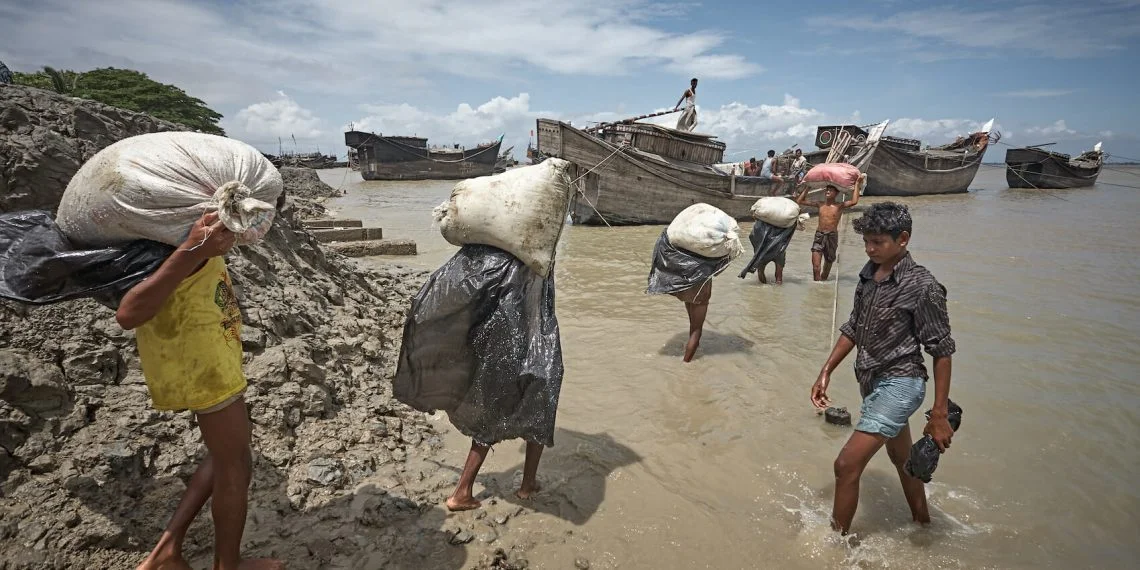
Climate change is no longer solely an environmental issue. It has become a major driver of human mobility, social transformation, and geopolitical instability. Across Africa, the Middle East, and parts of Asia, rising temperatures, prolonged droughts, water scarcity, desertification, extreme weather events, and declining agricultural productivity are increasingly forcing people to leave their homes in search of safety and livelihoods. While climate migration remains difficult to quantify precisely, international organizations estimate that tens of millions of people could be displaced internally or across borders over the coming decades as climate pressures intensify.
For Europe, climate migration represents one of the most significant long-term policy challenges of the twenty-first century. Unlike previous migration crises that were often linked to armed conflict or political instability, climate-driven migration is likely to develop gradually, affecting entire regions simultaneously and interacting with existing economic, social, and governance challenges. As a result, European governments must move beyond emergency responses and begin preparing for structural changes in migration patterns that could reshape societies for decades.
The relationship between climate change and migration is complex. Environmental factors rarely act alone. Instead, climate pressures often exacerbate existing vulnerabilities such as poverty, weak governance, resource competition, and social inequalities. A prolonged drought may destroy agricultural livelihoods, forcing families to migrate to urban areas. Rapid urbanization can then increase unemployment, strain public services, and generate social tensions. In fragile states, these pressures may contribute to instability and conflict, creating additional displacement.
The Mediterranean region increasingly illustrates these interconnected dynamics. Countries across North Africa and the Sahel face growing environmental stress, while population growth continues to increase pressure on land, water resources, and employment opportunities. Climate shocks can therefore become catalysts for migration, not because individuals are fleeing climate change directly, but because environmental degradation undermines their ability to sustain livelihoods and maintain security.
Sweden provides an important perspective within this broader European discussion. As a country with extensive experience in refugee reception, integration policies, and humanitarian engagement, Sweden has often been at the forefront of debates surrounding migration governance. However, the challenges associated with future climate migration differ from those experienced during previous refugee movements. They require long-term planning, cross-border cooperation, and a stronger integration of climate adaptation policies with migration management strategies.
One of the most important policy questions concerns legal frameworks. International refugee law was developed primarily to protect individuals fleeing persecution, conflict, or violence. It does not explicitly recognize climate migrants as a distinct legal category. As climate-related displacement increases, governments and international institutions may face growing pressure to reconsider existing legal definitions and protection mechanisms. The absence of clear frameworks risks leaving millions of vulnerable individuals without adequate legal protection.
At the same time, climate migration should not be viewed exclusively through a security lens. While migration often generates political controversy, evidence suggests that well-managed migration can contribute positively to economic development, labor market resilience, and demographic sustainability. Many European countries face aging populations and labor shortages in sectors such as healthcare, construction, agriculture, and technology. Under appropriate governance frameworks, migration can help address some of these challenges while providing opportunities for individuals displaced by environmental change.
The success of future migration policies will depend heavily on integration outcomes. Social cohesion, labor market participation, educational opportunities, and community engagement are critical factors influencing whether migration contributes to societal resilience or political polarization. Research consistently demonstrates that migrants who gain early access to employment, language training, and public services are more likely to integrate successfully and contribute positively to host societies.
Climate migration also raises important questions about global justice and international responsibility. Many of the countries most vulnerable to climate impacts have contributed relatively little to global greenhouse gas emissions. Meanwhile, industrialized economies have historically generated the majority of emissions driving climate change. This imbalance has fueled growing calls for wealthier nations to support climate adaptation, resilience-building, and sustainable development efforts in vulnerable regions.
From a peacebuilding perspective, addressing climate migration requires preventive approaches. Investments in climate adaptation, water management, sustainable agriculture, disaster preparedness, and economic development can help reduce forced displacement before it occurs. Strengthening local resilience may prove more effective and less costly than responding to large-scale migration crises after they emerge.
The European Union has increasingly recognized the links between climate change, migration, and security. However, policy responses remain fragmented. Climate policy, development assistance, migration governance, and integration strategies are often managed separately despite their growing interdependence. Future approaches must adopt a more holistic framework capable of addressing the multiple drivers of human mobility simultaneously.
Looking ahead, climate migration is likely to become one of the defining governance challenges of the coming decades. The question is no longer whether environmental change will influence migration patterns. It is how societies choose to respond. Europe faces a strategic choice between reactive crisis management and proactive preparation. The decisions made today regarding climate adaptation, migration governance, and social integration will shape not only migration outcomes but also the future stability, prosperity, and cohesion of European societies.
Ultimately, climate migration should be understood not merely as a humanitarian issue but as a central challenge for sustainable development, global peacebuilding, and international cooperation. Preparing for this reality requires long-term vision, evidence-based policymaking, and a commitment to balancing human dignity with effective governance. The future of migration policy will increasingly be inseparable from the future of climate policy itself.