
Swedish Center For Studies And Research
In light of the rapid transformations taking place in the Middle East, the confrontation with Iran can no longer be understood solely within the framework of proxy wars or indirect conflicts. Instead, it has entered a new phase characterized by more direct military and political entanglement, along with a clear expansion in the scope of threats. Recent developments suggest that the model of asymmetric deterrence, upon which Iran has long relied, is no longer capable of containing escalation; rather, it is increasingly contributing to accelerating and broadening it.
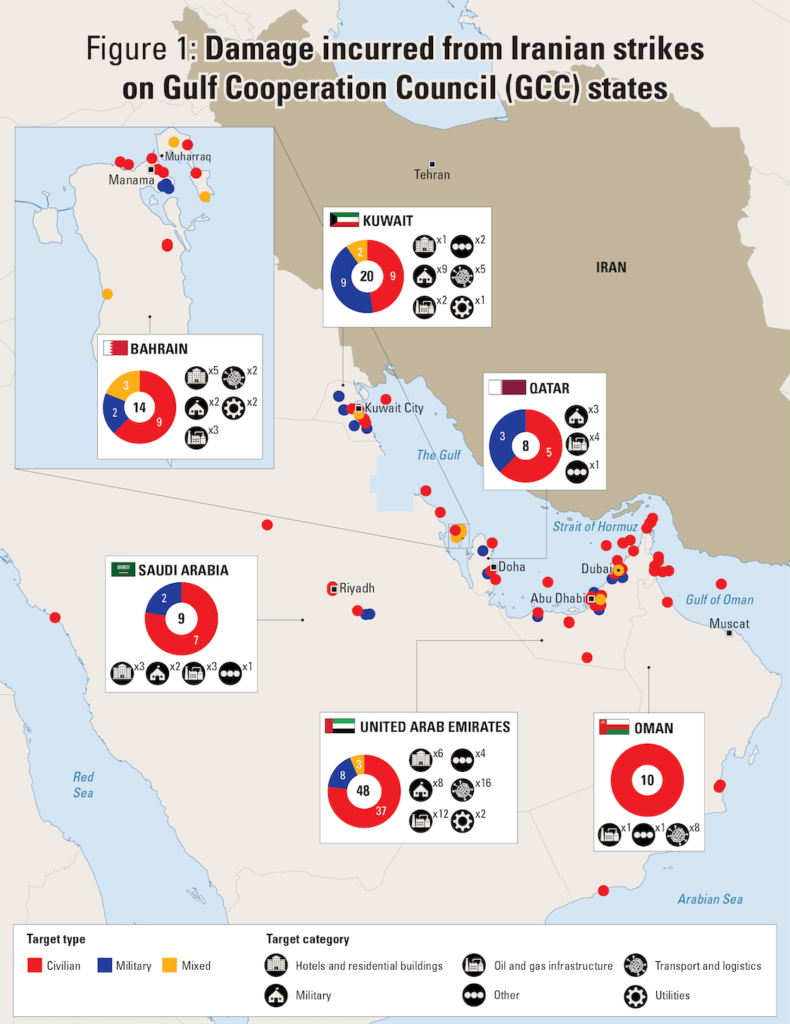
In recent years, the scope of Iranian threats has expanded to include direct targeting of Arab states, particularly in several Gulf countries, including the UAE, Kuwait, Bahrain, and Qatar, through the use of ballistic missiles and drones.
Military estimates indicate that hundreds of attacks linked to Iran or its regional networks have been recorded in recent weeks, targeting military bases, oil facilities, airports, and civilian areas. This reflects a shift from a policy of limited pressure to a pattern of widespread regional threat.
In this context, security researcher Michel Kings notes: “Iran is no longer content with managing conflicts through proxies; it is actively pushing to expand the scope of confrontation in ways that threaten regional stability.”
At the same time, recent confrontations have revealed a noticeable improvement in the air defense capabilities of Gulf states, with interception systems successfully neutralizing a significant proportion of attacks. Israeli and U.S. strikes have also demonstrated the ability to target sensitive sites deep inside Iranian territory and across its regional networks. This not only reflects military superiority but also exposes the limitations of the so-called “Axis of Resistance” in establishing an effective deterrence balance.
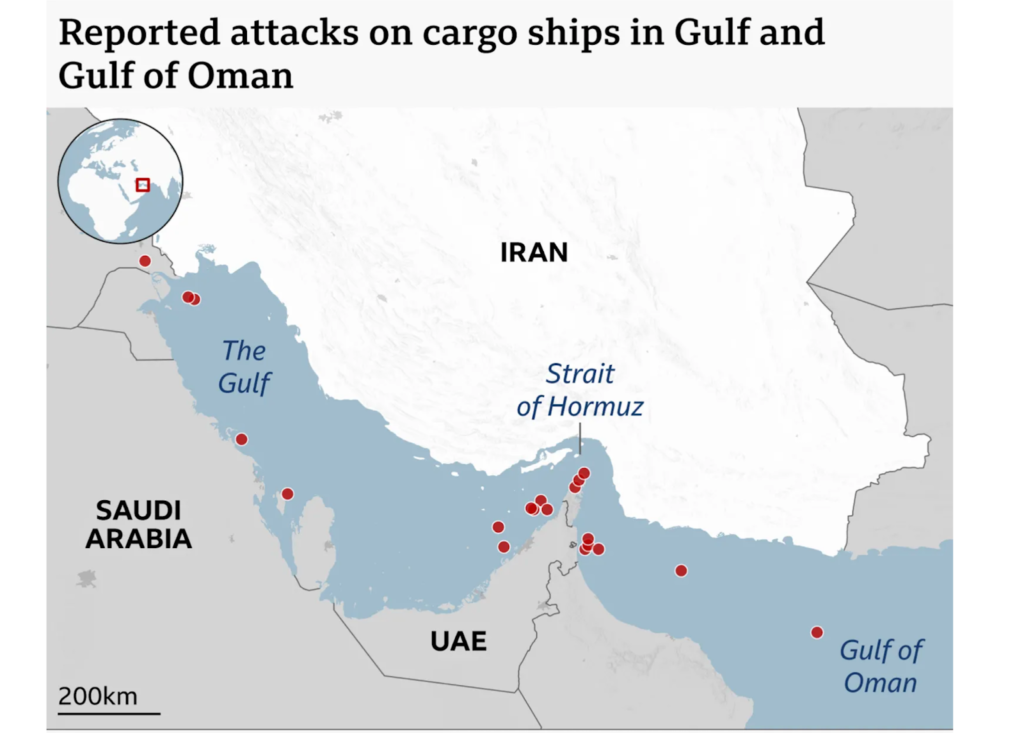
The escalation has not been confined to the military dimension; it has extended to pose a direct threat to the global economy particularly through attacks on energy infrastructure and threats to close the Strait of Hormuz, through which approximately 20% of the world’s oil supply passes. Estimates suggest that Iranian attacks on vessels attempting to transit the strait, along with disruptions in this vital corridor and attacks across the Gulf, have triggered shocks in energy markets and sharp price increases, with direct repercussions on global economic growth.
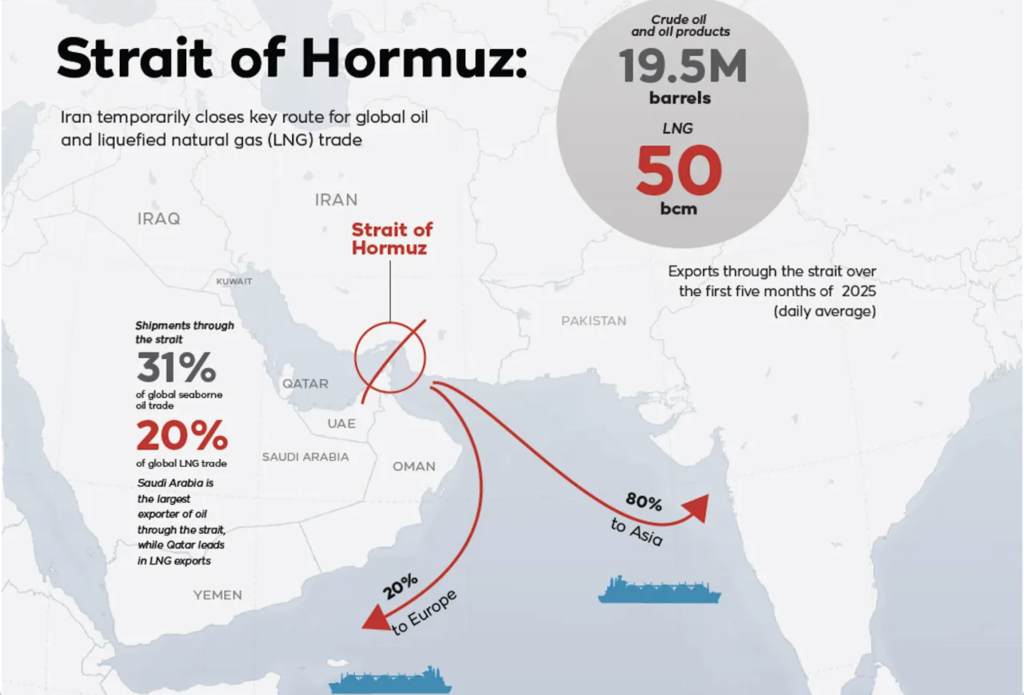
Iran’s attacks have led to the closure of the Strait of Hormuz, considered the most critical oil export passage in the world, as it connects major Gulf oil producers the United Arab Emirates and Saudi Arabia to the Gulf of Oman and the Arabian Sea.
At the same time, a notable shift has emerged in the Arab position, reflected in increased political coordination and the issuance of more aligned statements, alongside a clear affirmation of states’ right to self-defense. This shift indicates a gradual reassessment of the nature of the Iranian threat and the possibility of its evolution into broader forms of regional security coordination.
Accordingly, this study aims to analyze the strategic transformations in the confrontation with Iran by examining the expanding scope of the threat, assessing the balance of military power, and analyzing both the direct and indirect economic repercussions. It also seeks to interpret regional positions and explore the future of the so-called “Axis of Resistance” under increasing pressure.
The Expanding Scope of the Iranian Threat: From Indirect Influence to a Comprehensive Regional Threat
Recent developments point to a fundamental transformation in the nature of the Iranian threat. It is no longer confined to managing indirect conflicts through proxies; rather, it has expanded to include direct, multi-front targeting of countries in the region, particularly in the Gulf and Jordan. This shift reflects a transition from a model of “limited pressure” to an approach based on expanding deterrence through escalation, leading to an unprecedented rise in security risks.
In the recent period, thousands of attacks linked to Iran or its regional networks have been documented, involving ballistic missiles and drones targeting military bases, oil facilities, airports, as well as civilian areas. Attacks on energy infrastructure in the Gulf have marked a turning point, demonstrating the capacity of such operations to disrupt a significant portion of global oil supplies within short periods—highlighting a direct intersection between military security and economic stability.
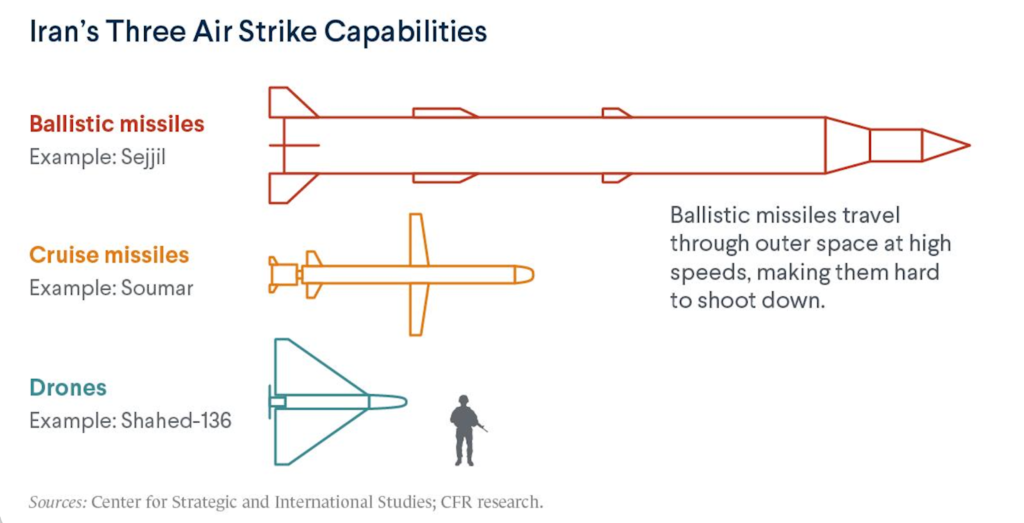
The use of low-cost drones and precision missiles has enabled Iran and its proxies to carry out high-impact attacks at relatively low cost. This has contributed to reshaping the traditional rules of engagement, making the threat more widespread and less predictable. This transformation is not limited to an increase in the frequency of attacks; it also involves a simultaneous geographic expansion across multiple arenas, in a pattern that can be described as “parallel escalation.”
More importantly, this widening scope of threat points to a shift in the nature of Iran’s own strategy. It is no longer directed at a single adversary; rather, it seeks to reshape the overall security balance in the region. Instead of achieving a stable deterrence equilibrium, this approach has contributed to a state of persistent instability, in which multiple countries become vulnerable to threats at the same time.
In this context, regional security researcher Peter Sab argues: “The Iranian threat is no longer confined to traditional arenas; it has become transnational and multi-dimensional, making it more difficult to contain than ever before.”
Moreover, this escalation has undermined regional trust and pushed affected states to strengthen their defensive capabilities and increase military spending, reflecting the region’s entry into a cycle of mutual escalation. Data from 2026 indicates a noticeable rise in military expenditure across the Middle East, driven in part by the growing threats associated with Iran.
It can be argued that the expansion of the Iranian threat represents a strategic turning point. This threat is no longer containable within limited geographic or political frameworks; rather, it has evolved into a comprehensive regional challenge that simultaneously affects military security and economic stability.
Estimates indicate that some attacks have led to the temporary disruption of approximately 10–15% of oil supplies in specific instances, clearly demonstrating the deep interconnection between military escalation and global economic instability.
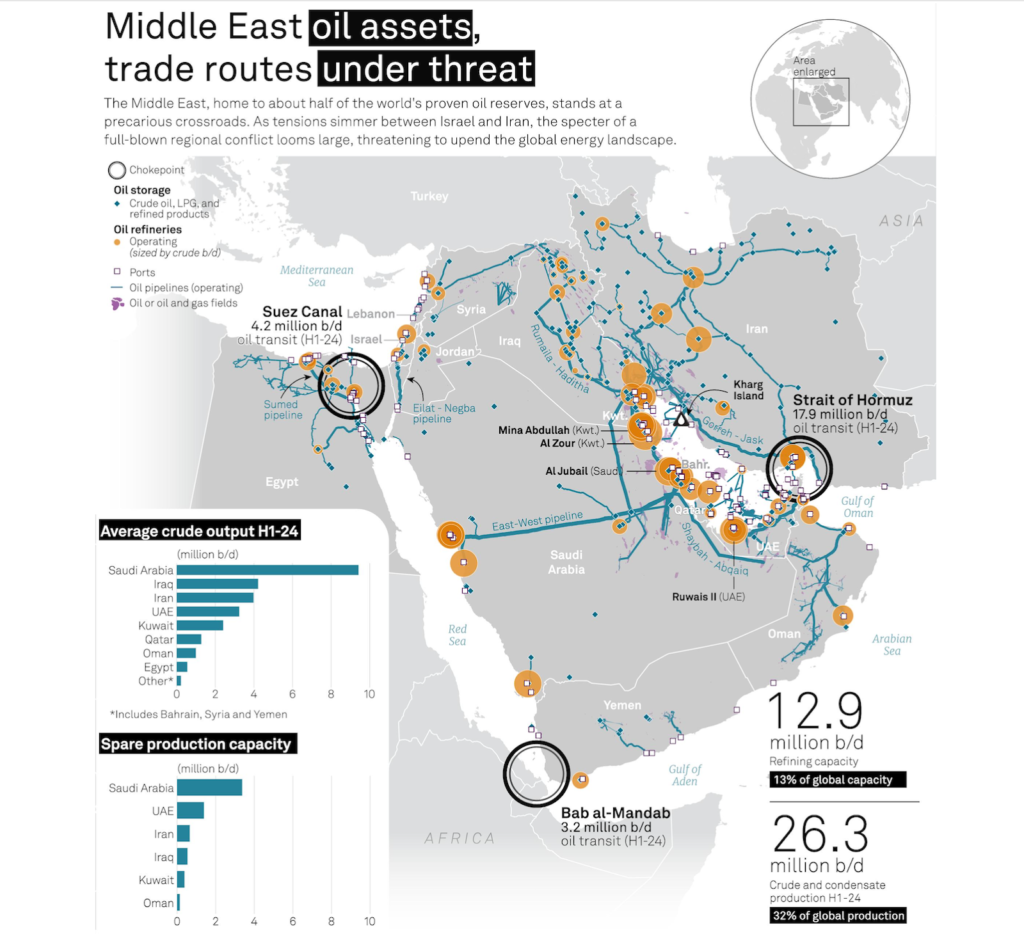
In the same context, data shows that millions of barrels of oil pass daily through the Strait of Hormuz and the Bab al-Mandab Strait, making any security disruption whether due to military escalation or attacks on infrastructure capable of triggering immediate shocks in international markets. For Europe, which is directly linked to this network through supply chains, any threat to these maritime corridors does not only impact energy prices but also extends to transportation costs, insurance premiums, and supply chains, thereby increasing the vulnerability of its economies to rapidly evolving geopolitical crises.
The Collapse of the Deterrence Equation
Recent confrontations reveal a clear erosion of the deterrence model that Iran has relied upon in recent years. Its military capabilities are no longer able to produce a strategic impact proportional to the scale of escalation. This erosion is particularly evident in the limited effectiveness of missile and drone attacks, contrasted with a noticeable improvement in the air defense capabilities of Gulf states and their allies.
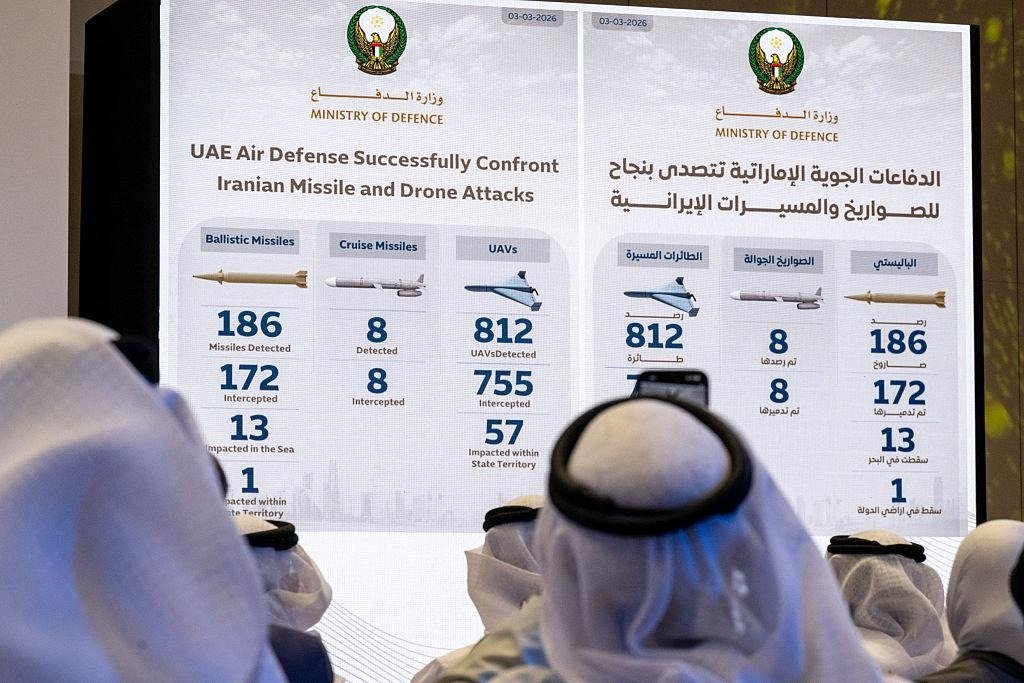
Multi-layered interception systems have successfully neutralized thousands of missile attacks and drone swarms, achieving high interception rates reaching approximately 80–90% in some cases. This has significantly reduced the operational effectiveness of Iranian attacks, or those carried out by its proxies, despite their numerical intensity.
Military expert Tim Niklas notes: “U.S. and Israeli military superiority is not based solely on possessing advanced technology, but on the ability to integrate it into a comprehensive operational system that significantly reduces the effectiveness of threats.”
Israeli strikes have also demonstrated an advanced capability to target sensitive sites deep inside Iranian territory and within areas of influence of its allies, including military installations, weapons depots, and command centers. These operations have not been limited to tactical objectives; they carry clear strategic implications most notably, that Iran’s strategic depth is no longer as secure as previously assumed.
Furthermore, the ability to conduct precise strikes without escalating into full-scale confrontation reflects a sophisticated level of escalation management. The equation of “strike without escalation” has emerged as an effective tool to limit Iran’s capacity for a proportional response, without risking a broader conflict.
More importantly, these confrontations have exposed the limits of the so-called “Axis of Resistance.” Despite long-term investment in building the military capabilities of regional allies, their impact has remained limited both in terms of inflicting strategic damage and in establishing a sustainable deterrence balance.
In this context, Middle East researcher Lorenzo Rocchi argues: “The Axis of Resistance possesses the capacity for disruption and escalation, but lacks the ability to change the rules of the game or impose a genuine strategic balance.”
It can therefore be argued that the current confrontation does not merely reflect military superiority of one side over another, but reveals a structural flaw in Iran’s deterrence model. Rather than achieving balance, this model has diminished the effectiveness of its own tools and deepened the gap between strategic ambitions and actual capabilities.
Global Energy and the Risks of Closing the Strait of Hormuz
Escalation linked to Iran is no longer measured solely by its military impact, but by its capacity to trigger large-scale economic shocks particularly when it involves energy and critical maritime routes.
In this context, the repeated threat to close the Strait of Hormuz represents the most powerful economic pressure tool in Iran’s arsenal, given that this passage constitutes one of the most vital arteries of the global energy market.
The Strait of Hormuz is the most sensitive chokepoint in the global energy system, with approximately 20 million barrels of oil passing through it daily. Estimates suggest that any large-scale closure of the strait could result in the loss of around 11 million barrels per day in supply, creating a deficit of nearly 9 million barrels in the global market, an amount exceeding the combined consumption of several major European economies.
In this context, energy expert Daniel Rossi notes:”Targeting energy infrastructure in the Gulf whether through direct attacks or via proxies adds another dimension to this threat. Disrupting part of production or threatening oil infrastructure does not only affect the targeted countries, but extends to the global market as a whole, particularly given the heavy reliance of many industrial and Asian economies on stable Gulf supplies.”
Analyses by the World Bank and energy institutions indicate that energy-related shocks do not remain confined to the oil sector; rather, they rapidly spill over into other sectors through rising costs of production, transportation, and insurance. This, in turn, intensifies inflationary pressures and affects both consumption and investment simultaneously. Consequently, any major escalation in the Gulf is not merely a regional crisis; it has the potential to evolve into a multi-dimensional global economic crisis.
More critically, the available alternatives to bypass the Strait of Hormuz such as certain pipeline routes in Saudi Arabia and the UAE remain limited in capacity compared to the volume of daily flows passing through it. This means that any large-scale disruption cannot be easily or quickly compensated for, increasing the vulnerability of the global energy system to military escalation.
In this context, economic security researcher Dr. Elena Richard notes: “The Strait of Hormuz is not merely an energy corridor; it is a strategic chokepoint capable of repricing risk in the global economy within hours.”
She adds: “Any major escalation in the Gulf could drive oil prices up by between 20% and 40% within a short period.”
Accordingly, it can be argued that the direct economic threat associated with Iran goes beyond the limits of political or military pressure, reaching a level that affects the stability of the international economic system itself. Rather than remaining confined to traditional conflict arenas, the confrontation now extends to markets, energy systems, and supply chains raising the cost of any escalation to a global level.
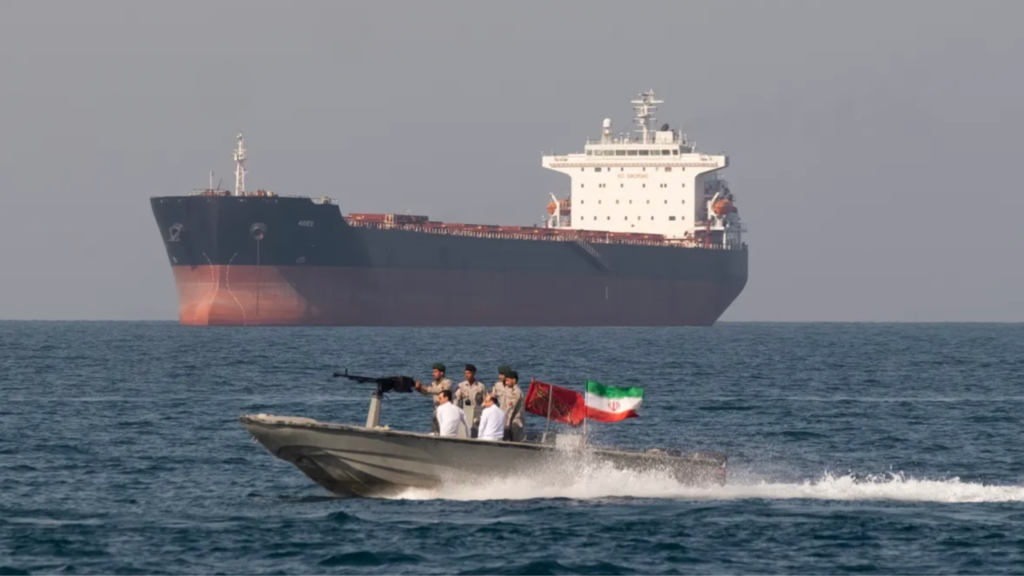
Market analyses since the beginning of 2026 indicate that tensions in the Gulf no longer affect energy prices alone, but also extend to shipping, insurance, and supply chain markets. During periods of escalation, maritime shipping costs and vessel insurance premiums have risen significantly due to attacks on ships by boats affiliated with Iran’s Islamic Revolutionary Guard Corps militias. This reflects a broader repricing of regional risk and underscores the deep interconnection between regional security and global economic stability.
The Arab Position: From Political Divergence to a More Unified Perception of the Iranian Threat
The recent period has witnessed a notable turn in the nature of the Arab position toward Iran, particularly among Gulf states including the UAE, Kuwait, Bahrain, and Qatar. This shift reflects a move from difference in assessments and approaches toward a more convergent understanding of the nature and scope of the threat.
Where Arab policies once ranged between cautious containment and political escalation, recent security developments especially the rise in missile and drone attacks have driven a growing recognition that the Iranian threat is no longer geographically or politically limited, but directly and comprehensively affects regional security.
This transformation has been reflected in joint statements issued by several Arab countries, which clearly condemned the targeting of critical infrastructure and civilian facilities across multiple Gulf states, including the UAE, Kuwait, Bahrain, and Qatar, and emphasized the right of states to protect their sovereignty. These positions also indicate a higher degree of political coordination compared to earlier stages, which were marked by clear divergence in responses.
At the same time, there are growing indications of increased security and military coordination among several Arab states whether through intelligence sharing, the development of air defense systems, or enhanced cooperation in protecting critical maritime routes and strategic infrastructure. This trend reflects a gradual shift from individual responses to collective approaches, driven by the recognition that the nature of the threat exceeds the capacity of any single state.
Energy-related threats and risks to maritime corridors have also played a decisive role in accelerating this convergence. Oil-producing countries and transit hubs increasingly recognize that their economic stability is directly tied to regional security, reinforcing the need for broader coordination in addressing shared risks.
In this context, regional security researcher Peter Lane argues:“Security in the Gulf is no longer a purely national issue; it has become a collective matter requiring coordinated responses to transnational threats.”
More importantly, this shift is not limited to the security domain; it has also extended to political discourse. Iran is increasingly framed as a source of regional instability, rather than as an actor that can be contained within traditional arrangements. This reflects a transition from managing tensions to redefining the threat itself.
Accordingly, it can be argued that the Arab position is undergoing a strategic realignment driven by changes in the nature of the Iranian threat. As the scope of this threat expands, the need for collective responses becomes more pronounced indicating a structural shift in how regional security is understood and managed.
Military spending indicators in the Middle East also point to a growing trend toward strengthening air defense capabilities and early warning systems. Several Gulf states including the UAE, Kuwait, Bahrain, and Qatar—have recorded significant increases in defense investments in recent years and have successfully intercepted more than five thousand Iranian missile and drone attacks. This shift reflects a growing awareness of the nature of modern threats, which rely on asymmetric tactics and rapid execution.
From a Project of Influence to a Deteriorating Strategic Burden
Recent developments reveal that what is known as the “Axis of Resistance” no longer constitutes an effective deterrence system. Instead, it has gradually evolved into a high-cost, low-return strategic model, reflecting a widening gap between Iran’s regional ambitions and its actual capacity to achieve them.
Despite the investment of billions of dollars over more than a decade in building and arming allied networks across the region particularly in Iraq, Yemen, and Lebanon, field evidence indicates a limited ability to achieve decisive strategic impact or to impose stable deterrence equations.
This axis is also facing growing challenges in terms of sustainability, driven by increasing military pressure, resource depletion, and rising operational costs. Moreover, its reliance on fragile political and economic environments in the countries where these networks operate further constrains their ability to function as long-term instruments of influence.
Repeated strikes targeting leadership figures and military infrastructure associated with this axis have weakened its organizational and operational capabilities, exposing clear vulnerabilities in its command-and-control structures. Estimates suggest that Iran has spent tens of billions of dollars since 2011 to support these networks, without achieving strategic returns commensurate with the scale of this investment.
At the same time, these networks have contributed to expanding the scope of threats, as energy infrastructure in Gulf Cooperation Council countries has become a primary target. The impact of these attacks has extended into the private sector, with more than 25 companies operating in Gulf states including national and international energy firms declaring force majeure. Estimates further suggest that restoring full production capacity may take between three to five years, raising serious concerns about the stability of regional and global supply chains.
Accordingly, it can be argued that this model no longer strengthens Iran’s regional position; rather, it contributes to complicating its security environment and increasing the pressures it faces, while widening the gap between its capabilities and ambitions. Instead of serving as a sustainable instrument of influence, the “Axis of Resistance” has become a deteriorating strategic burden, one that reveals the limits of converting indirect influence into long-term gains in a regional environment marked by growing complexity and rising costs of conflict.
Iranian Escalation… Direct Repercussions on Europe
The impact of escalation linked to Iran is not confined to the region; it extends directly to Europe, which depends heavily on the stability of energy supplies from the Gulf. With approximately 20% of global oil trade passing through the Strait of Hormuz, any threat to this corridor becomes an immediate source of pressure on European markets, which are still grappling with the repercussions of successive energy crises since the war in Ukraine.
Estimates by international energy institutions indicate that any large-scale disruption in the strait could lead to the loss of millions of barrels per day in supply contributing to oil price increases of up to 40% within weeks, according to energy security experts.
International energy expert Daniel Rossi emphasizes that: “Targeting energy infrastructure in the Gulf does not remain confined to producing countries; its impact is immediately transmitted to global markets, particularly in Europe, which relies on stable supplies to maintain its economic balance.”
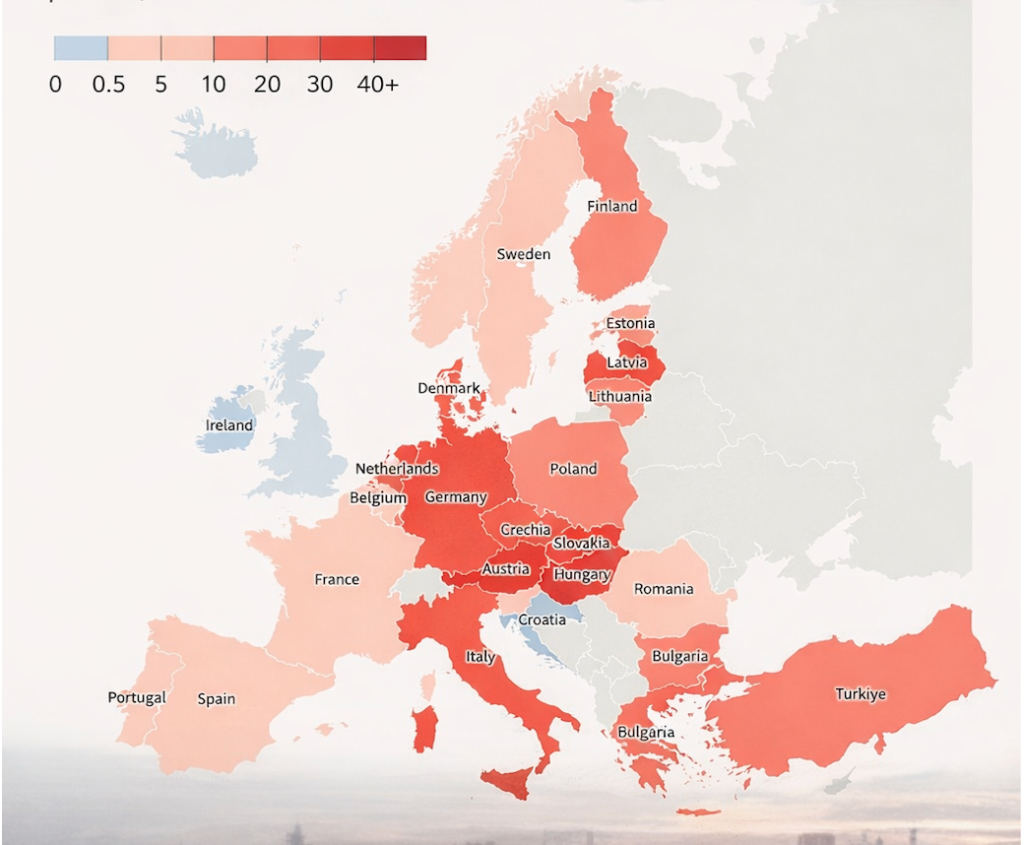
The impact is not limited to energy prices alone; it extends to the structure of the European economy as a whole. Rising oil and gas prices lead to higher production and transportation costs, which are directly reflected in inflation rates and place pressure on industrial sectors particularly in countries such as Germany and Italy that rely heavily on imported energy.
In this context, Marit Cluny, an analyst at the World Bank, notes that energy shocks “quickly spread across different economic sectors by increasing the costs of production, insurance, and shipping, ultimately leading to slower economic growth.”
Tensions in the Gulf also have a direct impact on global supply chains, as maritime shipping costs and insurance premiums rise during periods of escalation due to the repricing of regional risks.
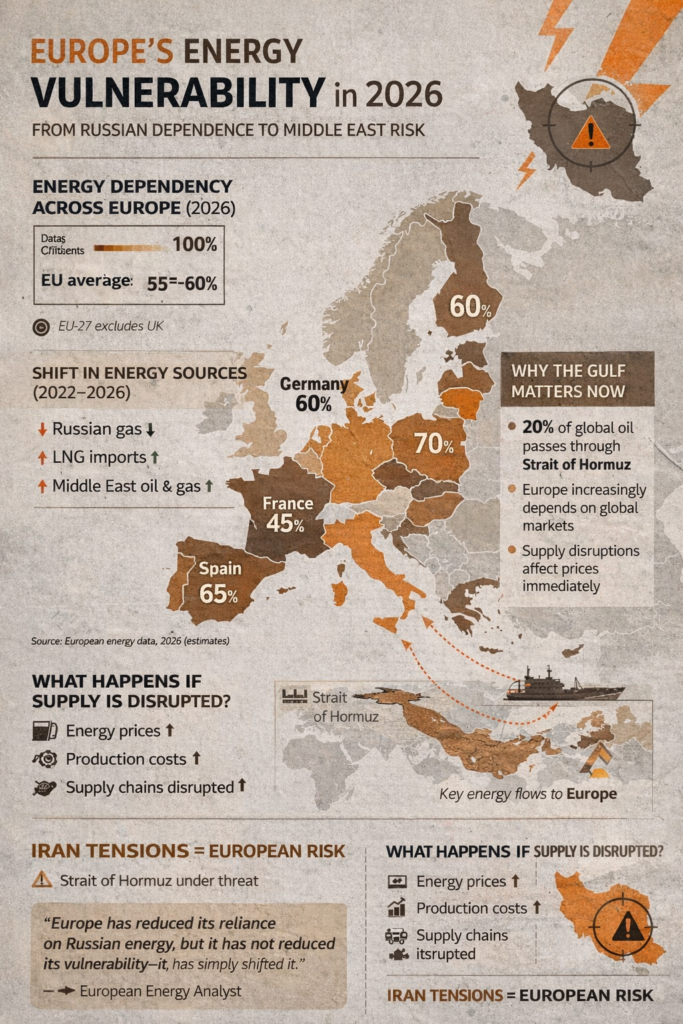
The chart illustrates the level of energy dependency across European Union countries, showing varying degrees of reliance. Countries such as Germany (approximately 60%), France (45%), Spain (65%), and Eastern European states (up to 70%) exhibit different levels of dependence, with the European average ranging between 55% and 60%.
European economic security expert Peter Lane states that “any escalation in the Gulf should not be viewed merely as a regional crisis, but as a direct threat to the stability of European markets, given the deep interconnection between energy security and global supply chains.”
Lane adds: “Europe today is more vulnerable to any disruption in the Gulf than it was in previous years, as alternatives remain limited, and any sudden price increase is likely to be immediately reflected in citizens’ daily lives and in government stability.”
In this context, Europe appears to face a complex dilemma. On the one hand, it is seeking to diversify its energy sources and reduce dependence on unstable regions; on the other hand, it remains heavily tied to Gulf supplies. This makes any military escalation or threat to critical maritime corridors such as the Strait of Hormuz a factor capable of reshaping the European economic landscape within a short period of time.