
Swedish Center for Studies and Research
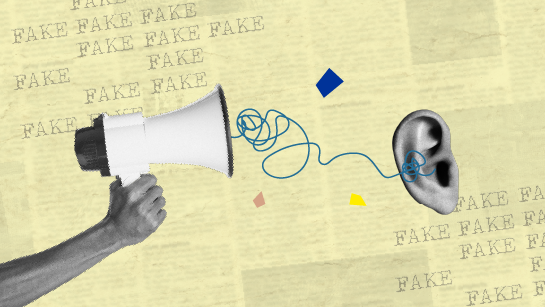
Disinformation and influence campaigns from domestic and international actors have thrived. European policies that build public trust in democratic institutions should be accompanied by regulation of online platforms that focuses on transparency and accountability.
Executive Summary
Disinformation and influence campaigns—both domestic and international—have eroded trust in European democracies, targeting electoral processes, public health responses, and social cohesion. This paper argues that strengthening public trust in democratic institutions must go hand in hand with regulatory frameworks for online platforms that enforce transparency, accountability, and algorithmic oversight. Drawing on EU policy debates, NATO/EU disinformation task force reports, and civil society initiatives, it outlines the mechanisms through which malign actors exploit digital ecosystems and highlights policy innovations that could serve as a model for democratic resilience.
Introduction: A Crisis of Trust
Since the 2016 Brexit referendum and the wave of Russian interference campaigns across Europe, trust in democratic institutions has become both a target and a casualty of disinformation. According to the 2023 Eurobarometer, fewer than 50% of EU citizens trust their national parliaments or media. Disinformation campaigns exploit this vacuum, offering alternative “truths” that destabilize public debate.
As former European Council President Donald Tusk once warned:
“Disinformation today is not only fake news—it is a weapon against democracy itself.”
This research explores how disinformation and influence campaigns operate in Europe, the domestic and international actors driving them, and what policies can restore resilience.
Section 1: The Landscape of Disinformation in Europe
1.1 Domestic Disinformation Actors
- Populist parties: Some far-right and far-left movements amplify conspiracy theories to delegitimize mainstream politics (e.g., AfD in Germany, Rassemblement National in France).
- Commercial disinformation: Profit-driven outlets thrive on polarizing content and health misinformation, as seen during the COVID-19 pandemic.
1.2 International Actors
- Russia: The EU’s East StratCom Task Force documented over 14,000 cases of Russian disinformation targeting Europe since 2015. Campaigns include false narratives about NATO “encirclement” and undermining support for Ukraine.
- China: Expanding influence operations through state media partnerships and social media amplification, especially during debates on 5G and COVID-19 origins.
- Non-state actors: Extremist groups weaponize online platforms to spread radical ideologies and recruit.
Section 2: Mechanisms of Influence
- Algorithmic amplification: Facebook and TikTok feed systems reward divisive and sensational content.
- Cross-platform coordination: Troll farms and bot networks push identical narratives across Twitter/X, Telegram, and fringe forums.
- Deepfakes and synthetic media: Increasingly used to create fake speeches, such as fabricated videos of Ukrainian leaders calling for surrender in 2022.
- Microtargeting: Use of harvested personal data to deliver hyper-tailored propaganda.
As Nina Jankowicz, a leading disinformation scholar, notes:
“Disinformation thrives in opacity. Without transparency in platform algorithms, malign influence campaigns will always have the upper hand.”
Section 3: European Policy Responses
3.1 Regulation of Platforms
- Digital Services Act (DSA) (2022): Requires large online platforms to provide transparency on algorithms and content moderation practices.
- Code of Practice on Disinformation: Voluntary framework, now being tightened under the DSA, obliges platforms to disclose political advertising and bot activity.
3.2 Building Institutional Trust
- Media literacy programs: Finland’s national curriculum includes critical thinking and digital literacy from primary school.
- Independent fact-checking networks: The European Fact-Checking Standards Network (EFCSN) coordinates cross-border debunking.
- Public broadcasting reforms: Strengthening editorial independence as a counterbalance to partisan narratives.
3.3 NATO and EU Cooperation
NATO’s Strategic Communications Centre of Excellence in Riga has mapped coordinated Russian campaigns in the Baltics, showing how disinformation is tied directly to security threats.
Section 4: Case Studies
- COVID-19 Vaccine Narratives: Russian state outlets like RT and Sputnik promoted anti-vaccine content in multiple EU languages, undermining public health campaigns.
- 2024 European Parliament Elections: Researchers at Oxford Internet Institute documented bot-driven amplification of extremist parties’ messages in at least 7 EU member states.
- Ukraine War: Disinformation narratives framed sanctions as the cause of energy crises, with polls showing significant public confusion in Germany and Italy.
Section 5: Towards Democratic Resilience
The fight against disinformation cannot rely solely on takedowns or censorship—it requires trust-building.
Recommendations:
- Transparency Mandates: Full disclosure of recommendation algorithms and ad libraries for political content.
- Accountability Systems: Penalties for platforms that fail to remove coordinated inauthentic behavior within defined timeframes.
- Civic Empowerment: Invest in citizen assemblies and participatory forums to counter feelings of exclusion that disinformation exploits.
- Cross-border Cooperation: Strengthen EU-NATO collaboration on hybrid threats, treating disinformation as both a security and a democratic challenge.
As European Commission Vice President Věra Jourová stated:
“Regulation alone will not save democracy. Only when citizens trust their institutions and feel ownership of them will disinformation lose its power.”
Conclusion
Disinformation and influence campaigns thrive in Europe’s vulnerabilities—fragmented media landscapes, declining trust, and opaque digital infrastructures. But these threats also offer an opportunity: to reimagine democratic resilience as both institutional reform and digital regulation.
In the words of David Kaye, former UN Special Rapporteur on freedom of expression:
“Transparency is not censorship. It is the condition for meaningful freedom online.”
By aligning platform regulation with democratic trust-building, Europe can transform the digital battlefield into a foundation for renewed civic confidence and durable democratic peace.