
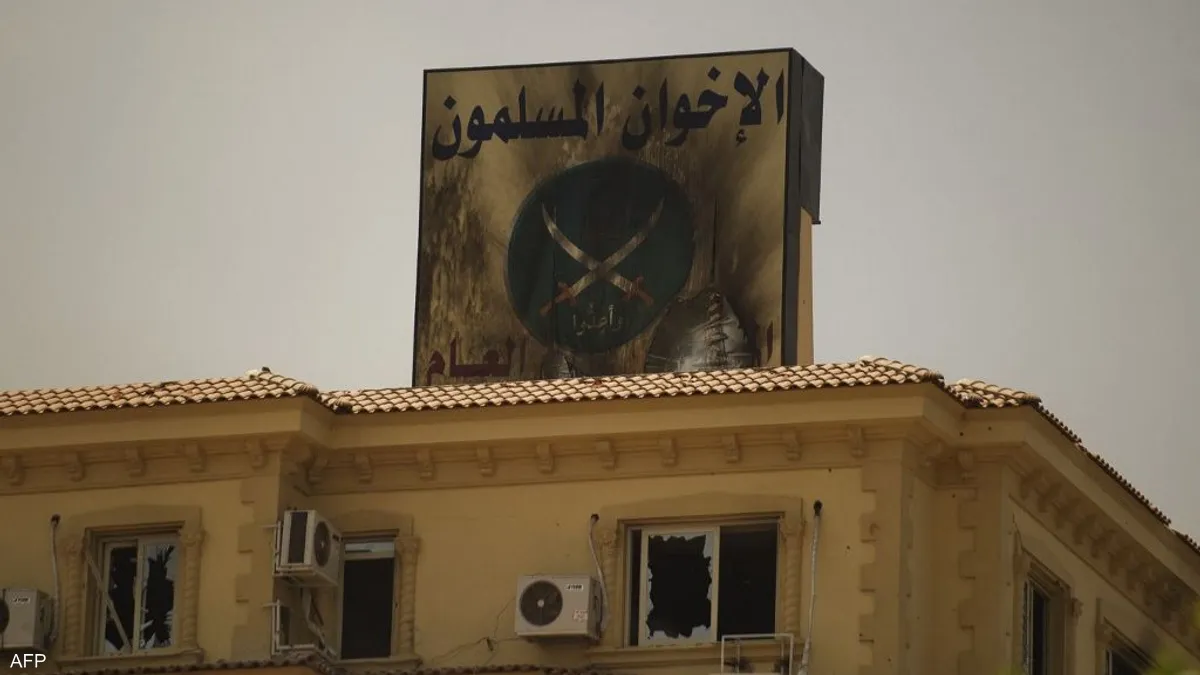
Stockholm
Over the past decades, the Muslim Brotherhood has expanded its presence across Europe through a strategy of “soft infiltration”, presenting itself as a civil and religious movement while pursuing a broader ideological and political agenda. The group has leveraged democratic freedoms to establish a wide network of charities, cultural centers, educational institutions, and advocacy organizations, all aimed at reshaping the identity of Muslim communities and influencing public policies.
The report highlights how the Brotherhood operates in countries like Germany, France, Sweden, Italy, and Austria, often through local Islamic organizations that maintain links to foreign funding and promote a dual discourse moderate in public, but ideological in private.
Their presence has undermined social integration, monopolized Muslim representation in official platforms, and in some cases, has been linked to radical networks. In response, several European governments have begun to tighten oversight, review public funding to religious groups, and introduce legal measures to counter political Islam.
Introduction
For decades, European societies have witnessed demographic and cultural transformations due to the increasing number of Muslim communities. This has been accompanied by intense debates over identity, integration, and extremism. In this context, the Muslim Brotherhood has emerged as a key actor, adopting a seemingly moderate discourse while seeking to build broad and sustainable influence through tools of “soft infiltration,” taking advantage of public freedoms and the legal frameworks governing civil work.
The group’s strategy consists of establishing a vast network of organizations, associations, cultural centers, charities, and educational institutions under the guise of civic and religious work. In reality, however, these entities promote a political-religious discourse aimed at reshaping the identity of Muslim communities, influencing public policy, and undermining the liberal democratic values upon which European societies are built.
This study examines the Muslim Brotherhood’s soft infiltration in Europe by providing an in-depth and well-documented analysis of their organizational tools, funding networks, and impact on Muslims and national policies—focusing particularly on countries like Germany, France, Italy, Sweden, and Austria. It also explores potential links between Brotherhood-affiliated organizations and jihadist groups and offers practical recommendations for policymakers.
I. Conceptual and Organizational Context
1. Origins and Expansion
Founded in Egypt in 1928 by Hassan al-Banna, the Muslim Brotherhood presented itself as a missionary and educational movement with global political ambitions. As repression increased in the Middle East, the group shifted its activities to Europe starting in the 1960s, particularly with the arrival of refugees from Egypt and Syria.
2. General Features of the “Soft Infiltration” Strategy
- Exploiting the atmosphere of openness and freedoms in Europe.
- Establishing charities and institutions with cultural or educational appearances that serve ideological agendas.
- Promoting a dual discourse: moderate in public, ideological internally.
- Seeking to monopolize Muslim representation in governmental and civil society institutions.
II. Tools of Institutional Infiltration
1. Islamic Associations and Centers
- In Germany, the Brotherhood operates through “The Islamic Community in Germany” (GID), founded in 1958, the Central Council of Muslims (ZMD), and “The Forum of European Muslim Youth and Student Organizations,” a network of 42 youth organizations across more than 26 countries.
- Germany’s Office for the Protection of the Constitution (BfV) noted in its 2022 report that the Brotherhood controls over 50 institutions, some of which receive funding from Middle Eastern countries.
- In France, the Brotherhood operated through the “Union of Islamic Organizations” (UOIF). Several associations, such as FEMYSO (comprising 32 organizations), have faced legal action due to anti-republican rhetoric.
- In Italy, the Union of Islamic Communities and Organizations in Italy (UCOII) emerged as the Brotherhood’s main arm and has been mentioned in media reports for receiving foreign funding.
2. Religious Education and Training
- Establishment of private schools and imam training centers promoting a conservative religious narrative encouraging loyalty to the organization and distancing from national values.
- A 2019 University of Montpellier study on Islamic schools in Paris revealed educational content hostile to secularism and gender equality.
3. Media and Digital Outreach
- The Brotherhood is active on social media, producing mobilizing content targeting Muslims.
- A 2022 report by Germany’s CEP Center highlighted dozens of Brotherhood-linked accounts spreading inflammatory propaganda.
III. Financial Network
- The Brotherhood’s funding is linked to institutions in specific countries known for supporting political Islam, in addition to diaspora donations and religious endowments in Europe.
- In Sweden, the “Uppdrag granskning” program revealed that some organizations received government funding despite promoting extremist positions.
IV. Societal and Political Impacts
1. Impact on Integration
- The Brotherhood redefines Muslim identity through a transnational lens, which promotes community isolation.
- A 2022 Hudson Institute report indicated that Brotherhood centers in Belgium promote an alternative identity to citizenship.
- In Sweden, politicians have expressed concern that some Islamic associations, such as the Stockholm Islamic Center, hinder refugee integration due to Brotherhood affiliations.
2. Usurping Official Representation
- The group aims to dominate advisory councils and government dialogue platforms in several countries.
- A 2021 CESE report in Austria found that 70% of Muslim community representatives in official forums were linked to Brotherhood-affiliated entities.
3. Links to Extremist Groups
- Despite moderate rhetoric, evidence exists of Brotherhood facilitation for jihadist elements.
- A 2023 report by the European Center for Counterterrorism Studies noted Brotherhood support for groups like Ansar al-Sharia in Libya.
- Turkish intelligence has documented investigations into Brotherhood members involved in moving fighters to Syria and Libya.
- The link between figures like Osama bin Laden and the Brotherhood, as confirmed by Ayman al-Zawahiri, supports the hypothesis of ideological and structural connections to jihadist violence.
V. Governmental Responses
France:
- The 2021 “Separatism Law” was passed to curb the influence of Islamic associations.
- In May and June 2025, France’s Defense Council held sessions to discuss a new law to cut Brotherhood funding.
Germany:
- Authorities have monitored the increasing number of Brotherhood-linked associations in Berlin and their real estate through “Europe Trust.”
Sweden:
- The government began a comprehensive review of funding grants after reports of Brotherhood-related Islamic organizations receiving public support.
Austria:
- Launched the “Documentation Center for Political Islam” and seized thousands of Brotherhood-related documents.
VI. Key Brotherhood-Affiliated Entities
- Islamic Community in Germany (GID)
- League of Muslims in Belgium (LMB)
- Union of Islamic Communities in Italy (UCOII)
- FEMYSO in France
- Liga Kultur in Austria
- Al-Raed Center in Switzerland
VII. Recommendations
- Strengthen state oversight of religious association funding.
- Establish a unified European observatory to monitor political Islam.
- Support progressive and independent Muslims in representing communities.
- Enforce transparency in the funding sources of Islamic associations.
- Develop educational programs that reinforce citizenship and belonging.
Conclusion
The Muslim Brotherhood represents a complex challenge for European societies that transcends security to encompass identity, integration, and cultural sovereignty. Addressing this challenge requires a deep understanding of the Brotherhood’s strategies and robust European cooperation to formulate policies that limit ideological infiltration without infringing on religious freedoms.
This study offers a foundation for analyzing the Brotherhood’s infiltration and its consequences while proposing long-term countermeasures.