
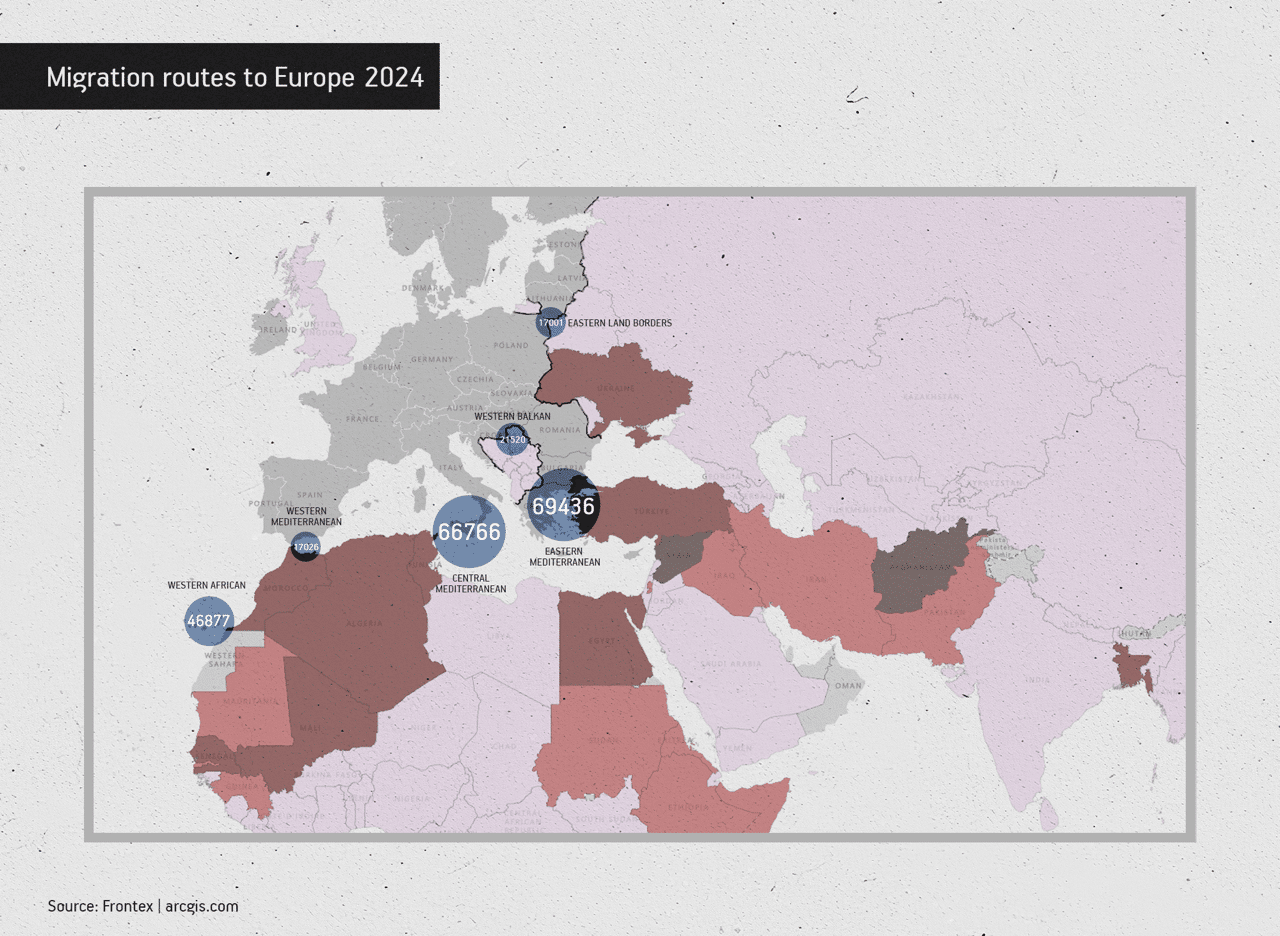
Abstract This paper critically analyzes the European Commission’s 2024 proposal to revise the 2008 Return Directive, with a focus on the introduction of so-called ‘return hubs’ via agreements with third countries. It explores the motivations behind the legislative change, the practical and legal implications, and the broader geopolitical consequences. The paper draws on existing human rights frameworks, EU legal instruments, and policy analysis to argue that the new revision risks institutionalizing systemic human rights violations, exacerbating migration tensions, and undermining EU values of dignity, justice, and rule of law.
Introduction
The European Union (EU) has long struggled to balance migration management with the protection of human rights. The Return Directive (2008/115/EC), originally intended to establish fair and transparent return procedures, has undergone periodic revisions and faced criticism for prioritizing deterrence over dignity. In April 2024, the European Commission proposed a new amendment to the Directive, introducing a potential legal basis for ‘return hubs’ through vague “agreements or arrangements” with third countries.
This proposal, heavily influenced by the demands of anti-migration member states, is a sharp turn in the EU’s migration policy. While framed as a practical response to increasing irregular migration, it signals a significant step toward externalizing EU border control responsibilities with minimal accountability.
Contextualizing the 2024 Return Directive Revision
The 2008 Return Directive was enacted to harmonize EU member states’ policies on returning irregular migrants. Despite its initial framing, critics noted its heavy emphasis on enforcement, detention, and expulsion, with insufficient safeguards for vulnerable populations. The 2024 revision must be viewed in the context of:
- The ongoing geopolitical crises (Ukraine, Gaza, Sahel, Sudan).
- Rising anti-migrant rhetoric in EU countries such as Hungary, Italy, and Poland.
- Increased political pressure to reduce irregular arrivals and asylum applications.
- Frustrations over the lack of a unified EU migration policy.
Commission Vice-President Margaritis Schinas described the proposal as part of a “new era of operational realism,” aiming to restore public confidence in EU border systems. However, critics argue that this realism comes at the cost of human rights and international cooperation.
Understanding the Concept of ‘Return Hubs’
Return hubs refer to offshore detention and processing facilities located in third countries outside the EU. These centres would house migrants awaiting deportation or further processing, often in countries with poor human rights records and insufficient oversight.
The proposed directive states that such hubs may be created through “agreements or arrangements” with third countries. The vague terminology is problematic:
- “Arrangements” may bypass parliamentary scrutiny and democratic accountability.
- Legal responsibility for rights violations becomes blurred.
- The risk of violating the principle of non-refoulement increases.
The EU previously rejected such a proposal in 2018, citing feasibility and legality concerns. Its revival now indicates a policy shift prioritizing containment over compliance.
Legal and Ethical Implications
4.1. Violation of Non-Refoulement Principle The most pressing concern is the risk of sending individuals to countries where they may face persecution, torture, or inhumane treatment. Article 33 of the 1951 Refugee Convention prohibits this. By outsourcing detention and return procedures, the EU may indirectly breach its obligations under international law.
4.2. Ambiguity of Legal Accountability Under international human rights law, states are responsible for actions they outsource. The use of “arrangements” allows member states to escape accountability while maintaining operational control. This legal grey zone could foster systemic abuses without legal recourse for victims.
4.3. Lack of Due Process The proposal fails to guarantee that individuals held in return hubs will have access to fair asylum procedures, legal counsel, or appeals. This undermines the EU Charter of Fundamental Rights (Article 47 on the right to an effective remedy).
4.4. Arbitrary Detention Detention should be a last resort, yet the hub model normalizes prolonged, potentially indefinite detention. The European Court of Human Rights (ECtHR) has consistently ruled against such practices (e.g., M.S.S. v. Belgium and Greece, 2011).
Financial and Operational Costs
Contrary to political claims, offshoring deportation is not cost-effective. The Australian offshore detention model cost billions and led to legal challenges and reputational damage. Similar risks exist for the EU:
- Construction and maintenance of return hubs.
- Diplomatic costs of securing and maintaining third-country cooperation.
- Legal fees from anticipated litigation by rights organizations.
The Commission has not presented a transparent budget or cost-benefit analysis, raising questions about the proposal’s economic viability.

Political Motivations and Member State Pressure
The revision appears to appease governments that have blocked solidarity-based solutions like relocation quotas. Hungary and Poland, for instance, have promoted externalization as a preferred alternative.
Eve Geddie of Amnesty International denounced the move, saying: “The Commission has caved to the unworkable, expensive and inhumane demands of a few shrill anti-human rights and anti-migration governments.”
Such policy-making by coercion undermines EU unity and contradicts the Commission’s stated mission of protecting European values.
Diplomatic Repercussions and Regional Instability
Return hubs rely on cooperation from third countries, often in politically unstable regions. These agreements could:
- Incentivize authoritarian regimes to accept migrants in exchange for EU aid.
- Destabilize regional politics by turning poor countries into de facto European border agents.
- Damage the EU’s moral authority and diplomatic relations with the Global South.
Libya and Tunisia, previously involved in migration deals with the EU, have already shown how such arrangements can backfire, with reports of abuse and refoulement.
Civil Society and Legal Responses
Human rights organizations are expected to challenge the revision in both public discourse and courtrooms. Legal avenues may include:
- The European Court of Justice (CJEU) for breach of EU law.
- The ECtHR for violations of human rights.
- National courts challenging the constitutionality of implementing legislation.
Civil society groups are also mobilizing campaigns to oppose the hubs, focusing on transparency, accountability, and justice for affected migrants.
Alternatives and Recommendations
Rather than externalizing migration control, the EU should consider:
- Strengthening asylum systems within member states.
- Enhancing legal pathways for migration and labor mobility.
- Supporting integration and inclusion policies to reduce fear and xenophobia.
- Investing in long-term development partnerships with countries of origin and transit.
Moreover, the EU should reaffirm its commitment to international law, transparency, and democratic oversight in all migration-related legislation.
Conclusion
The 2024 revision of the Return Directive represents a critical juncture for the European Union. While framed as a pragmatic solution to irregular migration, the introduction of return hubs threatens to institutionalize human rights abuses and erode legal protections. It reflects a broader trend of securitization and outsourcing that betrays the EU’s foundational values.
As the continent faces future migration challenges, it must choose between becoming a fortress or a beacon of human rights and solidarity. The proposed directive, in its current form, takes the former path. Urgent revisions and democratic scrutiny are essential to prevent long-term damage to the EU’s moral and legal architecture.
References
- European Commission (2024). Proposal for a Directive amending Directive 2008/115/EC.
- Amnesty International (2024). Statement on the Return Directive Revision.
- Refugee Convention (1951). UNHCR.
- Charter of Fundamental Rights of the European Union (2012/C 326/02).
- M.S.S. v. Belgium and Greece, ECtHR, 2011.
- European Parliament Briefing (2023). “Offshoring EU Migration Policy.”
- Human Rights Watch (2022). Libya and EU Cooperation on Migration.
- Global Detention Project (2023). Comparative Cost Analysis of Offshore Detention Models.
- Schinas, M. (2024). Press Conference Transcript on Migration Policy Package.
- ECRE (2023). Return Directive Revisions and Rule of Law in Europe.