
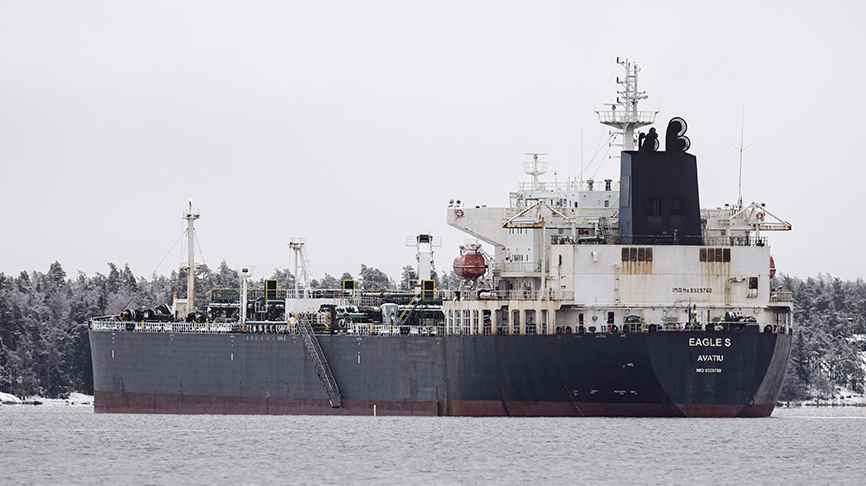
In the wake of Russia’s full-scale invasion of Ukraine in 2022, Western powers imposed a range of unprecedented economic sanctions designed to cut off the Kremlin’s access to global financial and trade systems. Among the key areas of enforcement lies the oil and shipping sectors, where Russia has developed what is now commonly referred to as a “shadow fleet” — a network of obscure, often untraceable tankers used to covertly transport oil and other goods in defiance of international sanctions.
This paper aims to explore the emergence of this shadow fleet, the mechanisms it uses to evade sanctions, the legal and operational challenges it poses to enforcement bodies, and finally, to propose a coordinated strategy for addressing this growing threat to global sanctions regimes and maritime security.
What is the Shadow Fleet?
The term “shadow fleet” refers to a loosely connected group of aging oil tankers and cargo vessels that operate outside normal regulatory and financial oversight. These vessels typically:
- Use flags of convenience from jurisdictions with weak oversight.
- Are owned by shell companies in opaque legal jurisdictions.
- Operate with disabled transponders (AIS spoofing or dark sailing).
- Engage in ship-to-ship (STS) transfers in international waters to obscure origins and destinations.
- Are not insured by Western or internationally recognized insurers.
Russia has increasingly relied on such vessels since the imposition of the G7-led price cap on Russian oil and the EU ban on seaborne crude. These ships help the country maintain oil exports while avoiding detection and legal consequences.
Methods of Sanctions Evasion
Russia’s shadow fleet uses a combination of tactics to bypass sanctions:
a. Re-flagging and Fake Registries
Ships are frequently re-registered under flags from countries such as Liberia, Panama, or even smaller, less regulated states. Some have been found using non-existent registries, making it harder to trace ownership or apply legal pressure.
b. Ownership Obfuscation
Shell companies in jurisdictions like the UAE, Hong Kong, or the Caribbean are used to obscure the beneficial ownership of vessels. This makes legal enforcement nearly impossible without extensive international cooperation.
c. Ship-to-Ship Transfers
Transfers are carried out in international waters — especially in the Mediterranean, off the coast of West Africa, or near the Strait of Malacca — allowing Russian oil to be blended or relabeled as originating elsewhere.
d. Disabling Tracking Systems
Turning off AIS (Automatic Identification System) is a direct violation of international maritime law, but it is routinely done to hide movement or destination.
Challenges in Enforcement
Enforcing maritime sanctions is complicated by multiple factors:
- Jurisdictional Gaps: International waters offer few enforcement mechanisms without flag state cooperation.
- Legal Loopholes: Even when caught, many ship owners claim ignorance or shift blame to technical operators or insurers.
- Global Oil Demand: Countries like India, China, and others continue to purchase Russian oil, indirectly fueling the need for shadow logistics.
- Limited Capacity: Western naval or customs authorities cannot realistically police all trade routes or intercept every vessel.
International Maritime Law and the Legal Gray Zone
Current frameworks under UNCLOS (United Nations Convention on the Law of the Sea) and IMO (International Maritime Organization) regulations provide basic structure, but are not designed for targeted economic enforcement. The use of “flags of convenience” is legal under current maritime law, though it severely undermines accountability.
The lack of a global enforcement mechanism, and the reluctance of some countries to participate in sanction enforcement, allows the shadow fleet to flourish.
Strategic Recommendations
To effectively address the shadow fleet and the broader issue of sanctions evasion, a multi-pronged approach is required:
a. Create a Global Registry of Sanctioned Vessels
Develop an interoperable, regularly updated registry that flags vessels with ties to sanctioned entities, beneficial owners, or illicit practices.
b. Strengthen Flag State Accountability
Impose diplomatic or financial pressure on countries that allow their flags to be used by the shadow fleet. Potential measures include trade consequences or port entry bans.
c. Enhance Port State Controls
Deny port access to vessels suspected of sanctions evasion or operating under questionable flags or insurance.
d. Use AI and Satellite Monitoring
Leverage satellite data and AI-driven maritime intelligence to monitor suspicious STS transfers and AIS-dark movements.
e. Engage the Insurance and Finance Sector
Pressure insurers, banks, and cargo certifiers to blacklist vessels or companies that facilitate sanctions evasion.
f. Expand Multilateral Cooperation
The G7, EU, and other allied nations must coordinate intelligence, enforcement actions, and diplomatic efforts to create a unified sanctions front.
Conclusion
The existence and operation of Russia’s shadow fleet represent a serious challenge to the effectiveness of global sanctions regimes. It undermines the rule of law at sea, contributes to environmental risks (due to the use of aging vessels), and threatens the integrity of the international economic system.
While enforcement is difficult, it is not impossible. By building stronger international cooperation, closing legal loopholes, and leveraging modern technology, governments can limit the effectiveness of such fleets and reinforce the message that sanctions are more than symbolic.